Language

2026-10-09
Content
Thermal fabric is any knit or woven construction engineered to hold a layer of still air against the body, because trapped air, not the yarn itself, is what actually insulates. Waffle knits do it with grid-shaped pockets, brushed fleece does it with raised loft, and hollow-core fibers do it inside each filament. If you are sourcing fabric for base layers, thermal underwear, hoodies or loungewear, three specifications decide the outcome: the knit structure, the fiber blend, and the grammage (GSM). Everything else, from hand feel to drying speed, follows from those three choices.
Heat leaves the skin through conduction into whatever touches it, through convection when air moves across the surface, and through radiation. A thermal knit attacks the first two. Still air is one of the poorest heat conductors found in everyday life, so a structure that locks small pockets of air next to the skin slows heat loss far more effectively than simply adding weight. A waffle knit builds those pockets into its honeycomb grid, a brushed fleece holds air in millions of raised fibers, and hollow-core polyester carries a tunnel of air inside every filament.
Moisture is the other half of the equation. Once a base layer gets damp, it pulls heat away from the body much faster than dry fabric, so a credible thermal knit has to move sweat out of the trapped layer while it insulates. This is why blends perform better than single-fiber fabrics: one fiber absorbs moisture, another dries quickly, and the structure keeps the air pockets intact between them. For a closer look at the mechanism, read how thermal fabrics work to provide insulation and retain body heat.
A simplified cross-section: pockets in the knit hold still air against the skin, while the outer face keeps cold moving air away from the insulation layer.
Buyers use the term thermal fabric as an umbrella, but the knit structures behind it trade warmth, weight, stretch and cost differently. The four constructions below cover most apparel programs.
| Structure | How it holds heat | Typical GSM | Best suited for |
|---|---|---|---|
| Waffle knit | Honeycomb pockets trap air while keeping the fabric breathable and light | 180-260 | Base layers, thermal sets, pajama tops |
| Interlock | Dense, smooth double knit that blocks wind and carries insulation fiber in the yarn | 220-300 | Thermal underwear, long johns, fitted base layers |
| Jersey | Light single knit; a brushed inside adds a soft insulating nap | 160-220 | Lightweight base layers, sleepwear, children's wear |
| Fleece | Brushed loft creates a thick still-air layer with the highest bulk per gram | 280-380 | Mid-layers, hoodies, loungewear |
Interlock deserves a special mention. Its two-sided, tightly knit face resists wind penetration better than an open single knit, and when it is spun with hollow-core polyester it becomes the workhorse of the thermal underwear category, offering four-way stretch through a small spandex content without losing density.
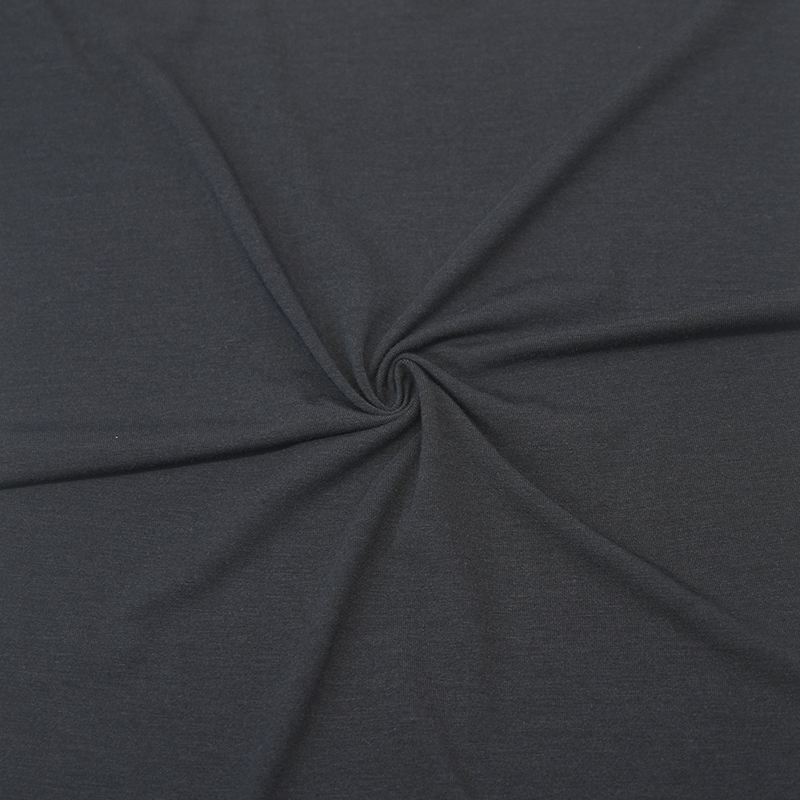 Bamboo Viscose Thermolite Stretch Interlock FabricA 290gsm interlock with hollow-core Thermolite and spandex stretch, this dense double knit suits thermal underwear and thicker loungewear, resisting wind while gaining extra warmth through optional fleece treatment.View Product →
Structure decides where the air sits; the blend decides how the fabric feels, how fast it dries, and how it behaves after twenty washes. Four fiber groups dominate thermal programs:
The same insulation yarn used in interlock also comes in a lighter single-knit construction, for customers who want warmth without the bulk of a double knit.
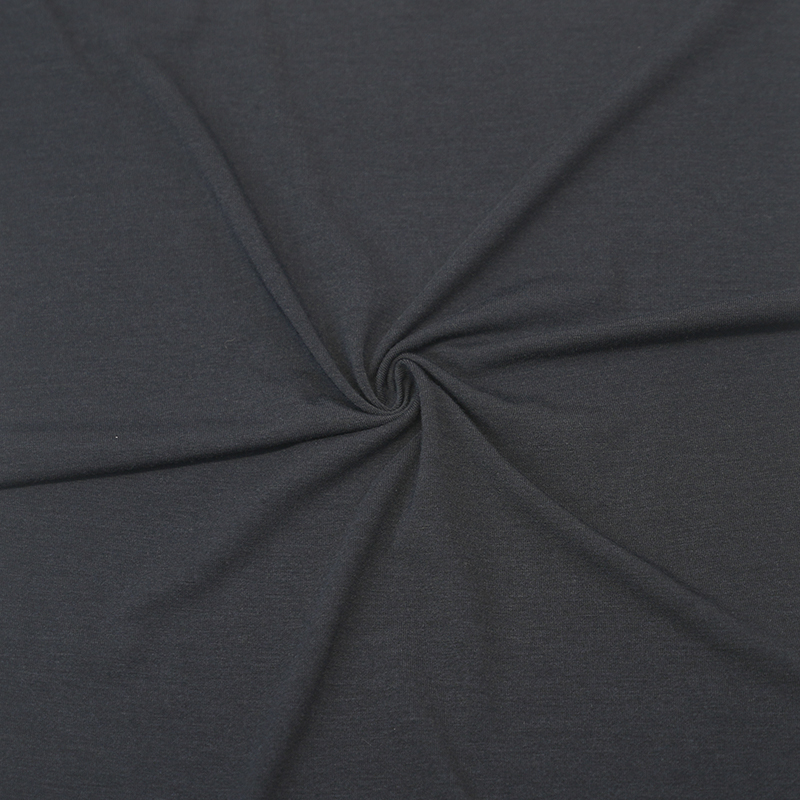 Bamboo Viscose Thermolite Stretch Jersey FabricThe lighter single-knit counterpart to the interlock, this jersey blends bamboo viscose with hollow-core Thermolite for warmth without bulk, ideal when you want thermal performance with a slimmer, more flexible garment.View Product →
The fastest way to narrow a shortlist is to start from the garment, not from the fabric. Each end use rewards a different combination of structure, weight and finish.
Interlock or waffle at 180-240 GSM with spandex for stretch and a close, layer-friendly fit.
Brushed fleece from roughly 280 GSM; confirm an anti-pilling finish if the garment will be washed often.
Hand feel comes first: brushed jersey or bamboo viscose blends with a gentle nap and no scratchy loose yarns.
Prioritize wicking and drying speed; a thermal knit that stays damp loses its insulation advantage mid-activity.
Loungewear is where brushed fleece blends earn their place, combining a soft interior with enough weight to read as a finished garment rather than an underlayer. A fleece with an acrylic component delivers that loft economically.
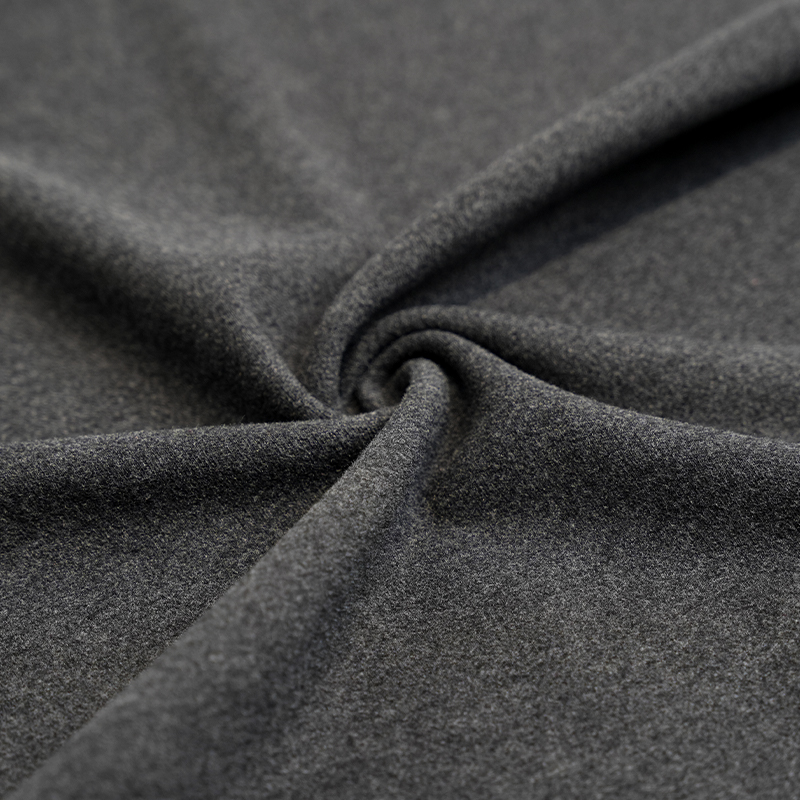 Acrylic and Bamboo Viscose Thermal FleeceBrushed fleece with an acrylic component delivers loft and a soft interior economically, giving loungewear enough weight and warmth to read as a finished garment rather than a simple underlayer.View Product →
To compare constructions side by side, browse the full thermal fabric range and request swatches of the two or three candidates that best fit your garment program.
Put candidate fabrics through the same checks a brand-side developer would run before approving a sample:
Working with an established knit mill shortens this loop. Nantong Tianhong Textile Technology Co., Ltd. (BAMSILK™), a knitted-fabric manufacturer based in Nantong, China, has spent more than two decades developing functional and sustainable knits, holds OEKO-TEX® Standard 100, OCS and FSC certification, and documents raw-material sourcing through a traceability system, which makes sample evaluation and scale-up far more predictable.
Is waffle knit warmer than a flat interlock?
At the same weight, waffle usually traps more air, but a heavier brushed fleece can out-insulate a light waffle. Compare structure and grammage together rather than in isolation.
Does thermal fabric stretch?
Waffle and rib structures stretch because of their geometry, while smooth interlocks need a small spandex content for the same recovery. Confirm stretch and recovery on a swatch before grading sizes.
Why does a thermal top feel cold once I sweat?
Moisture conducts heat away quickly and collapses the trapped air pockets. Choose a blend that separates absorption from insulation, so one fiber manages sweat while another keeps drying fast.
How should thermal knits be washed?
Follow the mill's care instructions for the specific blend. Most hollow-polyester and acrylic blends tolerate gentle machine washing, while high heat and aggressive tumbling flatten fleece loft over time.
Related Products
Contact Us for More Details
Don't hesitate to contact when you need us!
Contact Information
Add:
Room 806, Building D, Jingyang Plaza, Chongchuan District, Nantong City, Jiangsu Province, China
E-mail:
Product Category
QR Code
Join our community and stay connected
 English
 Español
 Tiếng Việt