Language

2026-10-02
Content
Polyester spandex fabric is a stretch blend that combines the strength, dimensional stability and quick-drying behavior of polyester with the elastic recovery of spandex, most commonly at ratios between 95/5 and 80/20. If a garment needs to stretch, hold its shape, resist wrinkles and survive easy-care laundering in one material, this blend is the most dependable and cost-effective starting point.
The blend works because its two fibers do opposite jobs. Polyester supplies tensile strength, dimensional stability, colorfastness and a hydrophobic surface that absorbs very little water, so perspiration travels along the fiber to the fabric face and evaporates instead of soaking in. Spandex, also known generically as elastane, is a synthetic polyurethane fiber that stretches to more than five times its original length and snaps back repeatedly without permanent deformation.
Even a small spandex percentage changes how the fabric behaves. At 5% a jersey feels like a stable knit with gentle give; at 15-20% it behaves like a second skin. Because the blend is almost always knitted, in structures such as jersey, interlock, rib, mesh and scuba, the construction adds stretch on top of the fiber's own elasticity, which is why this category dominates leggings, fitted tees, underwear and swim.
Four properties explain why this blend keeps winning specifications year after year.
Spandex content governs elasticity. A well-built blend returns to its original dimensions after thousands of stretch cycles, which is what stops knees, elbows and waistbands from bagging out.
Polyester resists abrasion and repeated laundering, so garments keep their appearance through a long service life when the yarn and knit are specified correctly.
Polyester absorbs under 1% of its weight in water, so sweat wicks to the surface and dries fast rather than weighing the garment down during workouts.
Machine washable, quick drying and wrinkle resistant. The single exception is heat: high dryer temperatures gradually weaken spandex and shorten its working life.
The right ratio depends on how far the garment must stretch and how tightly it should fit. The ranges below reflect common mill practice; always confirm the exact specification with your supplier, because stretch behavior also depends on yarn count, knit structure and finishing.
| Blend (Polyester / Spandex) | Stretch Feel | Typical Applications |
|---|---|---|
| 95 / 5 | Gentle give with a stable body | Everyday tees, dresses, light linings |
| 92 / 8 | Balanced stretch and support | Soft leggings, underwear, casual sportswear |
| 88 / 12 | Firm, supportive four-way stretch | Performance leggings, fitted sportswear |
| 85 / 15 | High recovery, body-hugging | Swim, base layers, dancewear |
| 80 / 20 | Maximum elasticity and snap | Competitive swimwear, compression pieces |
The blend earns its place wherever a garment must stay close to the body while it moves. Three end uses account for most of the demand.
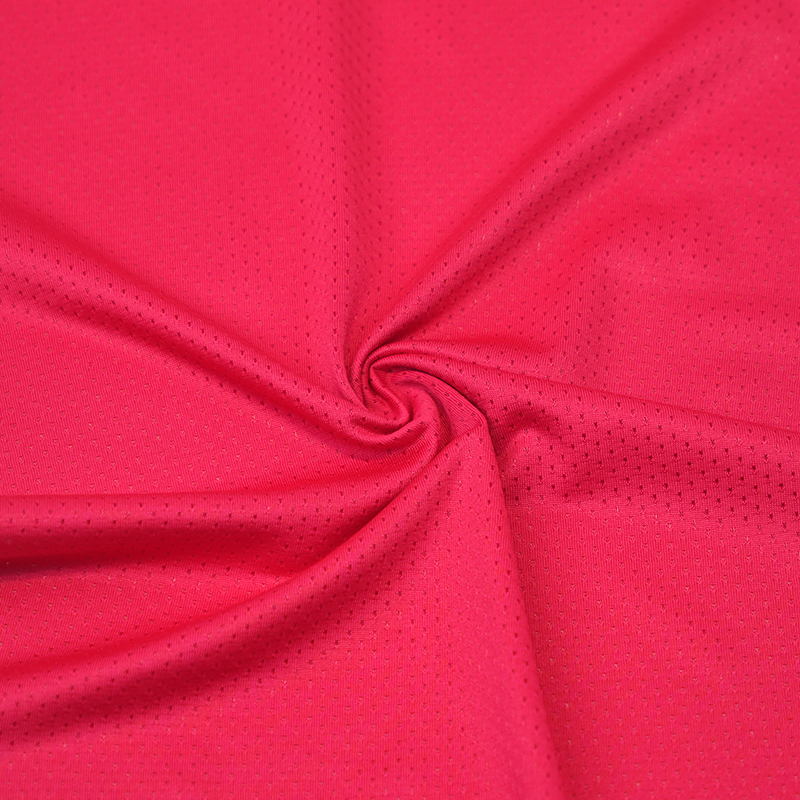
Stretch knits allow slim patterns without restricting movement, and polyester's quick-dry surface keeps training sessions comfortable. A recycled polyester spandex jersey in the 180-240 GSM range balances coverage with breathability, while mesh versions add airflow in high-heat zones of team uniforms and gym wear.
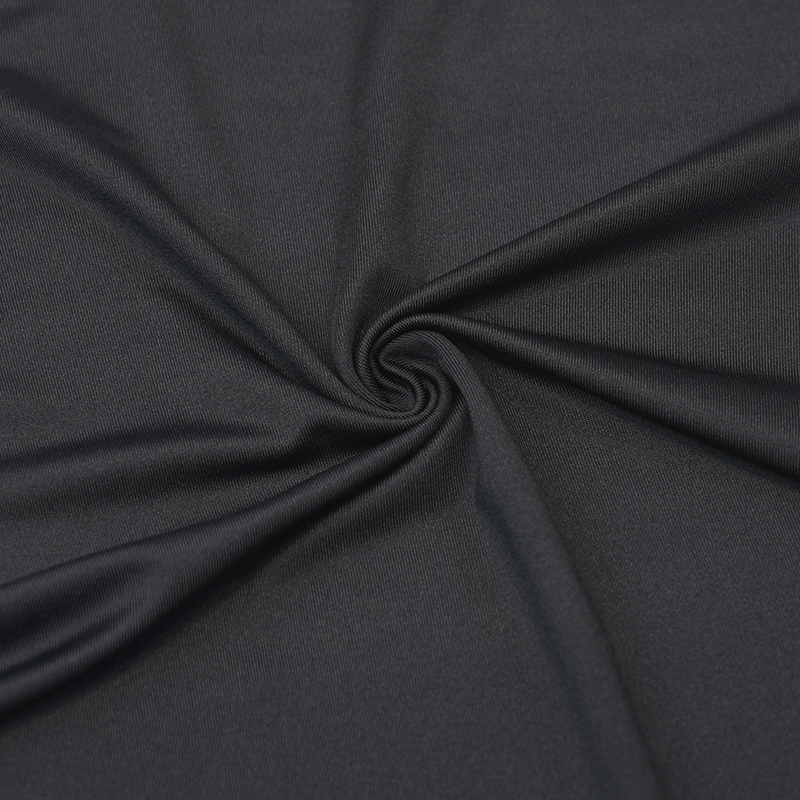 Recycled Polyester Spandex Jersey Sportswear FabricMade with thicker 150D recycled polyester yarn for a stronger, more substantial feel with added durability and support. The 180-240 GSM range balances coverage and breathability, suiting training wear and uniforms where quick-dry stretch matters.View Product →
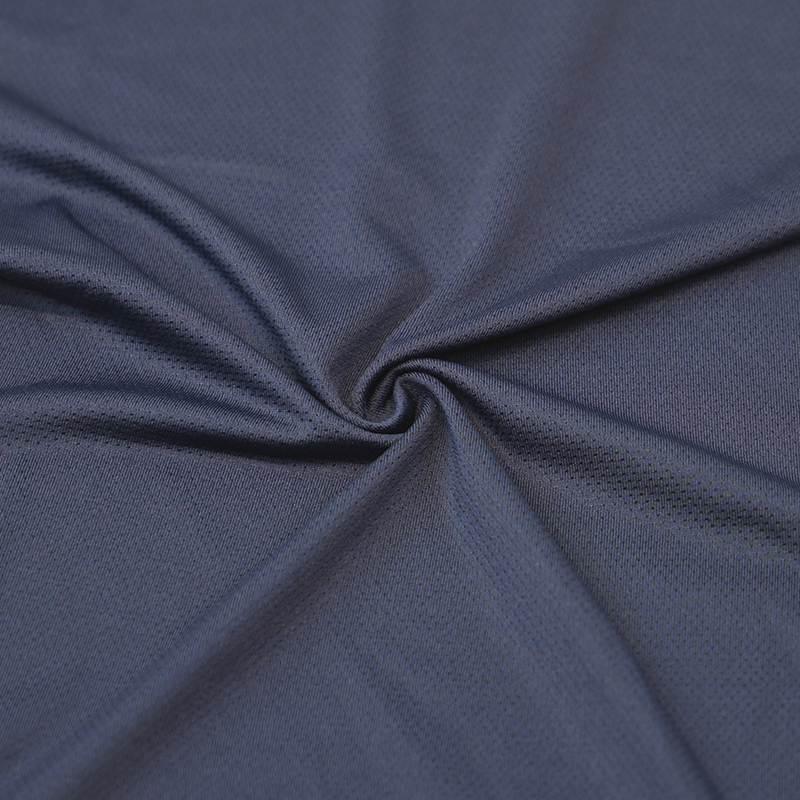
Next-to-skin comfort depends on a soft hand, four-way stretch and a smooth surface that sits flat under outer layers. A 90/10 recycled blend around 140-180 GSM gives briefs, bralettes and lounge sets a fit that recovers wash after wash.
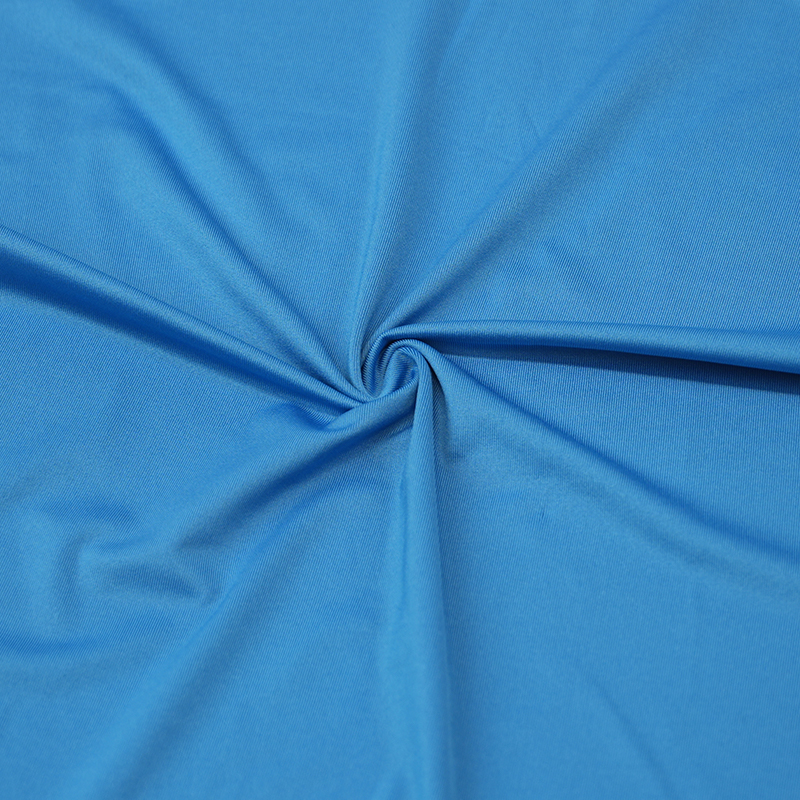 Recycled Polyester Spandex Jersey Underwear FabricA soft-hand, four-way stretch jersey in the 140-180 GSM range that sits smoothly next to skin and recovers wash after wash. Well suited to briefs, bralettes and lounge sets that need lasting fit and comfort.View Product →
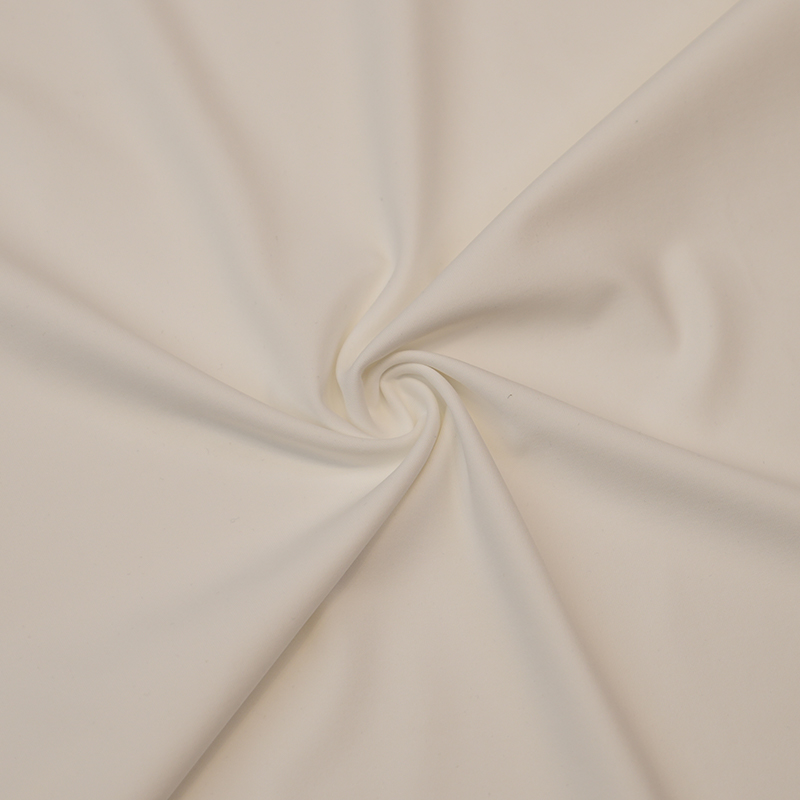
For stretch tees the main job is shape retention: collars and cuffs stay flat, hems resist bagging and the body keeps its line through repeated wear. Lighter weights around 140-170 GSM with 5-8% spandex suit this category well.
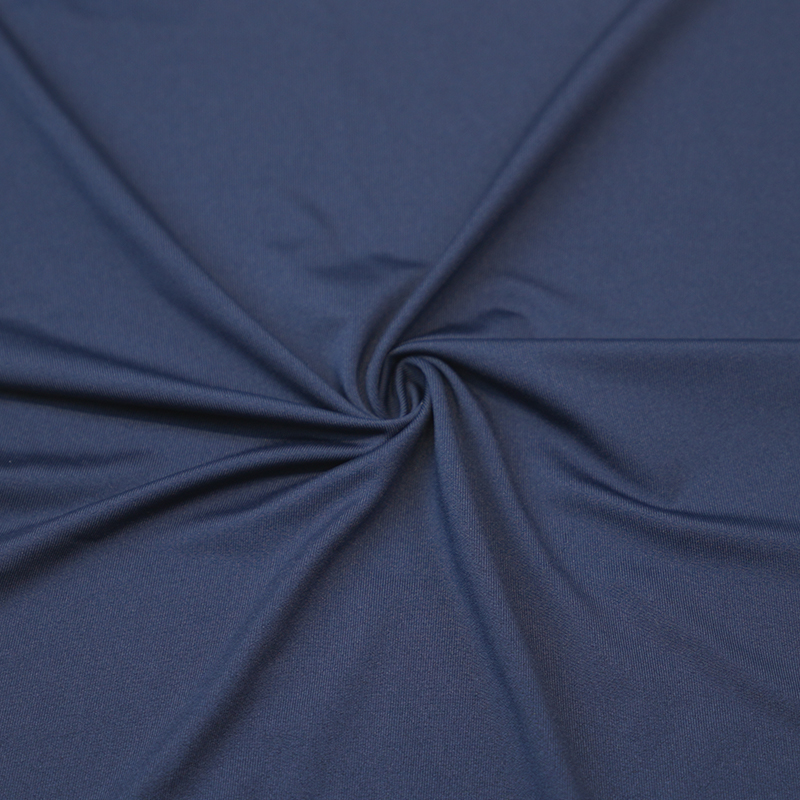 Recycled Polyester Spandex Jersey T-Shirt FabricA lighter stretch jersey around 140-170 GSM with 5-8% spandex, designed to keep collars, cuffs and hems flat through repeated wear. Knitting and finishing choices also help reduce pilling on printed surfaces.View Product →
Polyester handles heat far better than spandex does. Elastic fibers degrade gradually at high dryer temperatures, and the first symptom is a garment that loses its snap and starts to bag at the knees and waistband. Wash blends cool or warm on a gentle cycle, skip chlorine bleach, and tumble dry on low or hang dry when the garment allows it. Friction is the other factor to watch: abrasive drum surfaces and rough wash loads can raise pills on the surface, particularly on printed jerseys. We explain why spandex printed jersey fabric can pill during washing, and how knitting and finishing choices reduce the risk.
Most buyers now ask whether the blend can meet sustainability targets without giving up performance. It can. Recycled polyester (rPET) made from post-consumer bottles spins into yarns with the same strength and dyeing behavior as virgin fiber, and when it is certified under the Global Recycled Standard it carries documented traceability through the supply chain. In stretch knits the recycled version handles, stretches and recovers the same way, which is why our recycled polyester spandex line has become the default choice for brands with published sustainability commitments.
Stretch fabrics are less forgiving than stable wovens, so the sampling stage decides whether a program runs smoothly. Four checks separate a reliable mill from a risky one:
Two-way stretch suits tees and dresses; four-way stretch is non-negotiable for leggings and sportswear.
Confirm the spandex percentage, GSM and knit structure in writing, and check how they perform together in your target pattern.
Look for OEKO-TEX® Standard 100 for skin-contact safety and the Global Recycled Standard for recycled-content claims.
Wash it three times, then check stretch recovery, shrinkage, hand feel and colorfastness before releasing a bulk order.
Nantong Tianhong Textile Technology Co., Ltd. (BAMSILK™) has spent more than two decades developing and producing stretch and functional knits for global apparel brands, with third-party certification across the supply chain and documented traceability from yarn to finished roll. Send us your target garment and specification, and our team will recommend the right blend, weight and structure for your program, or request samples through our contact page.
How much spandex should a polyester spandex blend contain?
It depends on the garment. Fitted tees work well with 5-8%, general activewear uses 10-15%, and compression or swim categories go up to 20%. More spandex means more power and recovery, but also higher cost and greater sensitivity to heat.
Does polyester spandex fabric shrink?
Shrinkage is minimal compared with cellulosic fibers because polyester is dimensionally stable. The real risk is heat damage to the spandex, which shows up as permanent stretching and bagging rather than shrinkage, another reason to keep drying temperatures low.
Is polyester spandex fabric breathable?
Yes, when it is engineered correctly. Polyester holds very little water, and knit structures such as jersey, mesh and interlock create airflow channels that let heat and vapor escape. Open structures and lighter weights breathe better than dense scuba knits.
Can polyester spandex fabric be made with recycled polyester?
Yes. Certified recycled polyester performs like virgin fiber in stretch knits and is available with Global Recycled Standard documentation, so brands can make verified content claims on the same base fabrics they already use.
Related Products
Contact Us for More Details
Don't hesitate to contact when you need us!
Contact Information
Add:
Room 806, Building D, Jingyang Plaza, Chongchuan District, Nantong City, Jiangsu Province, China
E-mail:
Product Category
QR Code
Join our community and stay connected
 English
 Español
 Tiếng Việt