Language

2026-09-04
Content
Softness that survives repeated washing is usually the first thing a buyer tests when shortlisting fabrics for briefs, base-layer tees, or a loungewear capsule. Run a modal knit through your hands, then compare it with a standard viscose jersey, and the difference in smoothness is obvious. Whether that difference justifies the price depends on how well you understand what modal is, what it does well, and where it underperforms.
The short answer: modal is a regenerated cellulose fiber made by chemically dissolving wood pulp and wet-spinning it into fiber. It delivers a silk-like hand, high moisture absorption, and better dimensional stability than standard viscose rayon, which makes it a strong candidate for underwear, premium tees, and soft draped knits. It is not a natural fiber, it carries no inherent antibacterial property, and repeated high-heat drying will shorten its life. Used in the right blends, those trade-offs are easy to manage.
Modal belongs to the regenerated cellulose family, alongside viscose rayon and lyocell. Chemically, it is a second-generation viscose: a high-wet-modulus fiber that keeps its structure better when wet. Production starts with hardwood pulp, most famously from beech trees. The cellulose is dissolved using sodium hydroxide and carbon disulfide, filtered, then pressed through a spinneret into a regeneration bath. The newly formed fiber is washed, finished, and cut into staple fiber for spinning. Nothing in that chain is mechanical extraction; it is chemical processing from start to finish.
That matters because the word "natural" gets attached to modal and to bamboo viscose far too often in marketing copy. Both are semi-synthetic: plant cellulose dissolved by chemicals and then regenerated. Neither fiber comes from a mechanical process such as spinning cotton or wool. If your program calls for organic bamboo, the accurate specification is viscose derived from organically grown bamboo, backed by OCS certification rather than vague fiber-origin claims. Precise language here prevents disputes during documentation audits.
One clarification for anyone arriving from a general search: outside textiles, "modal" describes a category of auxiliary verbs in grammar. In fabric sourcing, modal names the fiber discussed throughout this article.
Because the fiber is produced under controlled conditions, quality stays consistent between lots, and the "high wet modulus" label is what separates modal from standard viscose: garments keep their shape while saturated, which is why modal knits hold up in the wash far better than older rayon fabrics ever did. For a closer look at how producers grade and name the variants, the guide to modal fabric types and their uses is a practical reference.
The performance case for modal rests on four properties: hand feel, moisture absorption, dimensional stability, and color retention. The table below compares modal with the fibers it is most often benchmarked against in sourcing meetings. Note that three of the four are chemically processed cellulose; only cotton is natural.
| Property | Modal | Cotton | Bamboo viscose | Lyocell |
|---|---|---|---|---|
| Fiber category | Regenerated cellulose | Natural seed fiber | Regenerated cellulose | Regenerated cellulose |
| How the fiber is made | Chemical wet spinning of hardwood pulp | Mechanical harvest and spinning | Chemical wet spinning of bamboo pulp | Solvent spinning in a closed loop |
| Hand and drape | Silky and fluid | Soft and matte | Soft and fluid | Soft with slight crispness |
| Moisture absorption | Higher than cotton | Good | High | High |
| Strength when wet | Better than standard viscose | Strongest of the four | Similar to standard viscose | Strong |
| Shrinkage behavior | Low with proper care | Moderate unless pre-shrunk | Low to moderate | Low |
Two numbers worth requesting from any supplier: shrinkage within plus or minus 5 percent after repeated laundering, and a colorfastness rating of grade 4 or better against washing and rubbing. Modal's dye uptake is high, so colors come out deep and stay that way longer than on many natural fibers, but ratings should be confirmed with test reports rather than taken from a brochure.
Pilling is another practical checkpoint. Fine modal fibers knit into smooth surfaces, but abrasion during laundering can still cause pills on low-twist yarns, so ask for a pilling grade measured on the actual construction, not just on the fiber type.
Modal rarely runs solo in production. Blend ratios are chosen to add stretch, structure, or softness, and each combination below maps to a specific garment category.
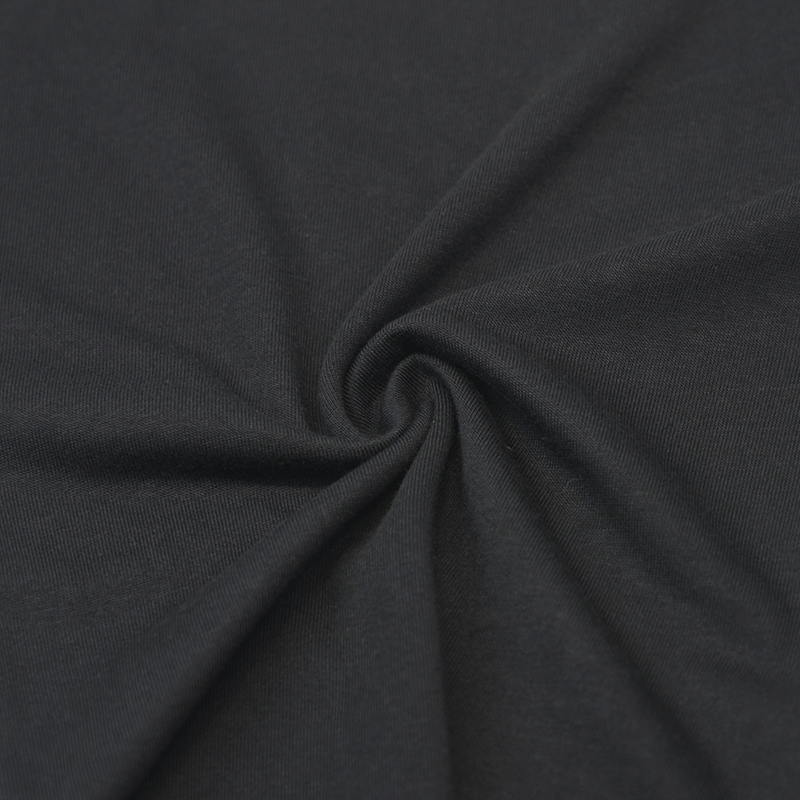
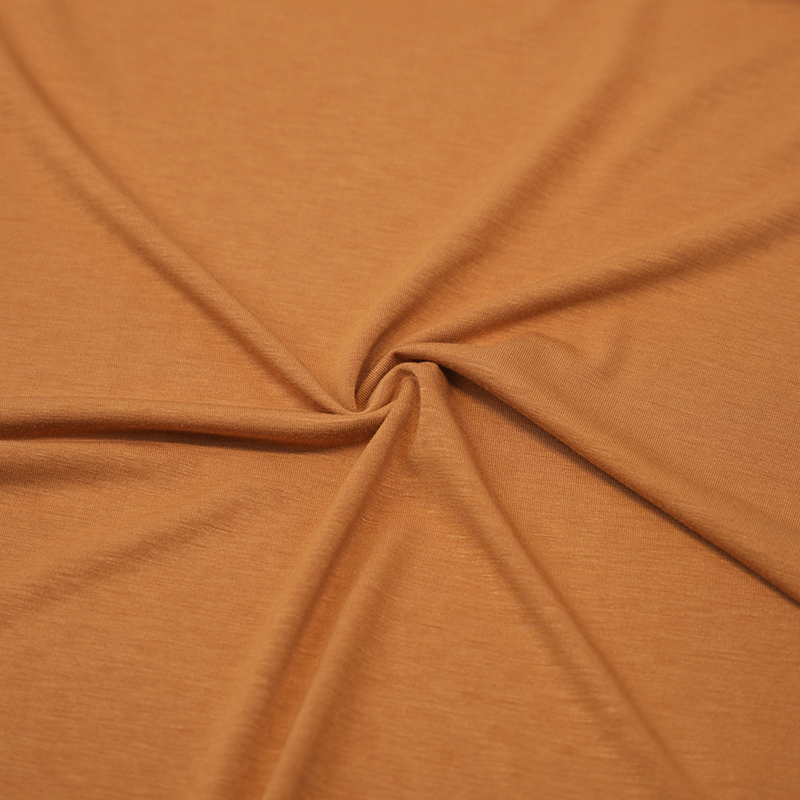
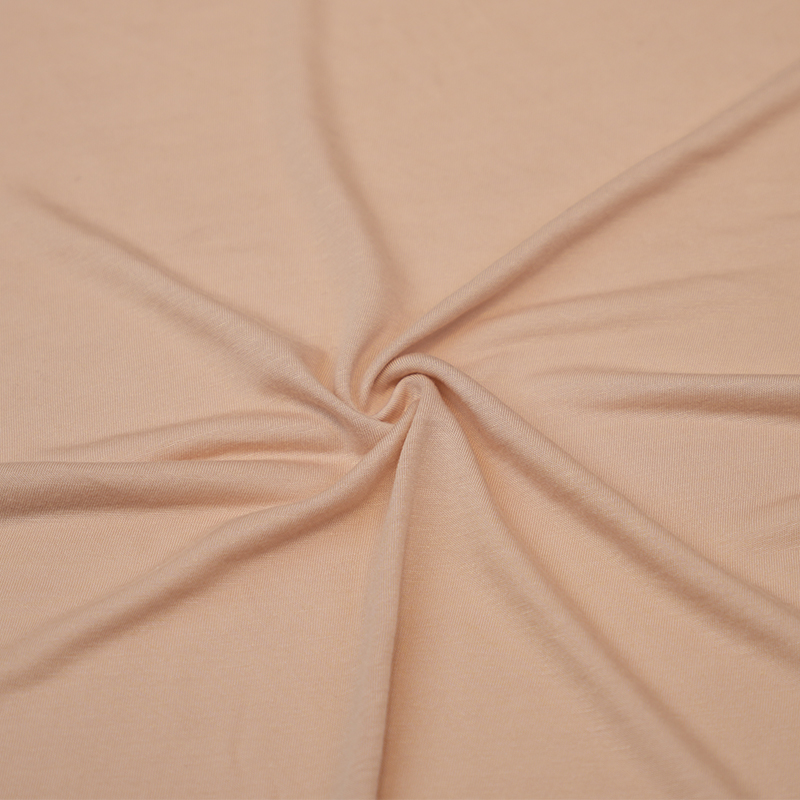
Adding 5 to 10 percent spandex produces a four-way-stretch jersey with excellent recovery, which is exactly what underwear and second-skin base layers need. A modal spandex jersey used for briefs and underwear keeps its fit through dozens of wash cycles, because the cellulosic base absorbs moisture while the spandex handles elongation.
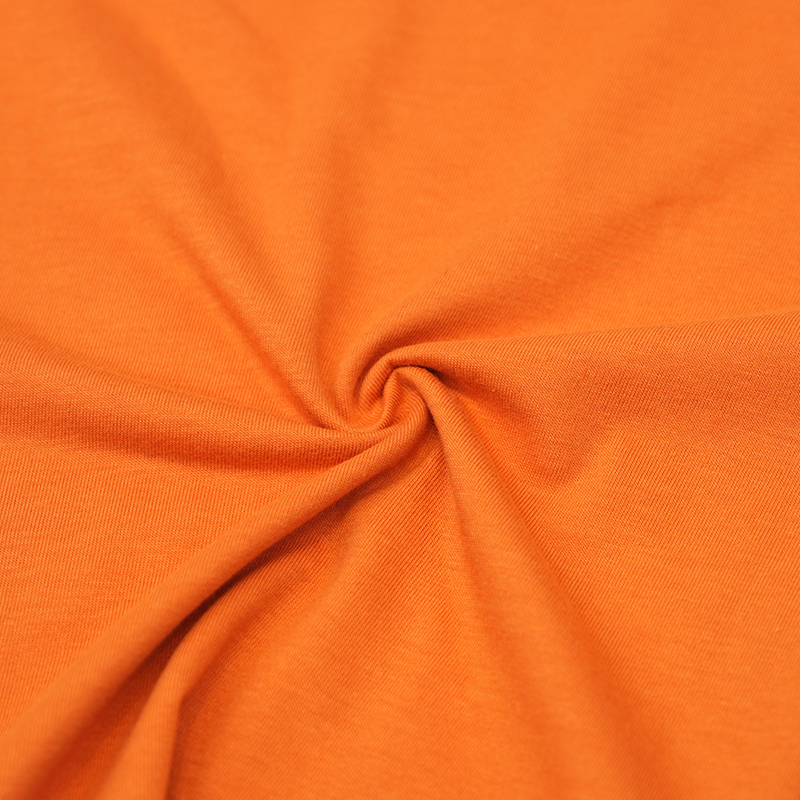
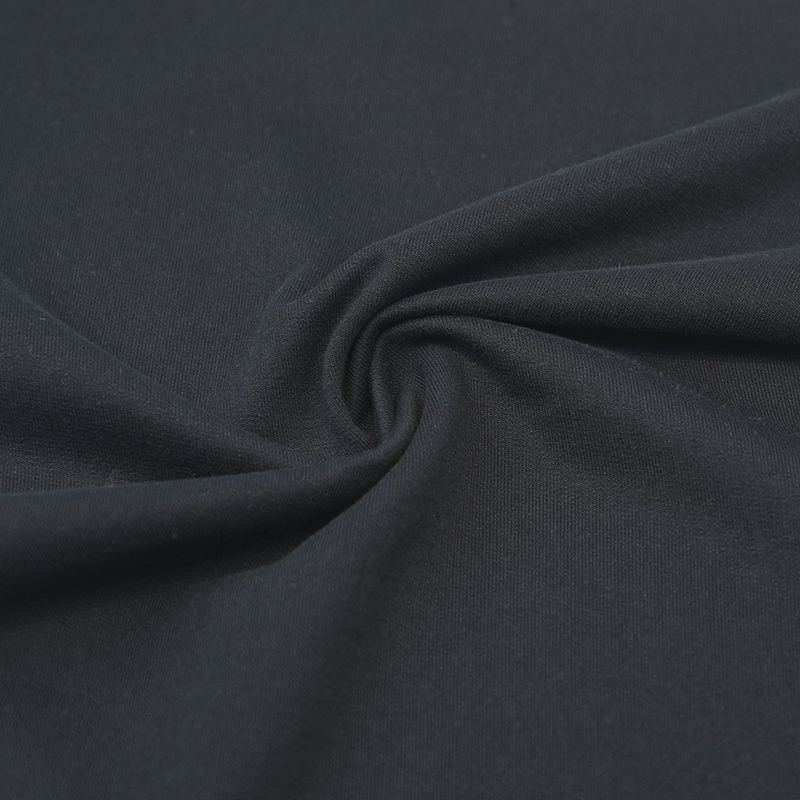
Polyester adds resilience and reduces cost, and it makes heavier constructions possible. A modal polyester stretch french terry, for example, gives hoodie-weight programs a softer face than a cotton-polyester equivalent while keeping body and shape retention through heavy wear.
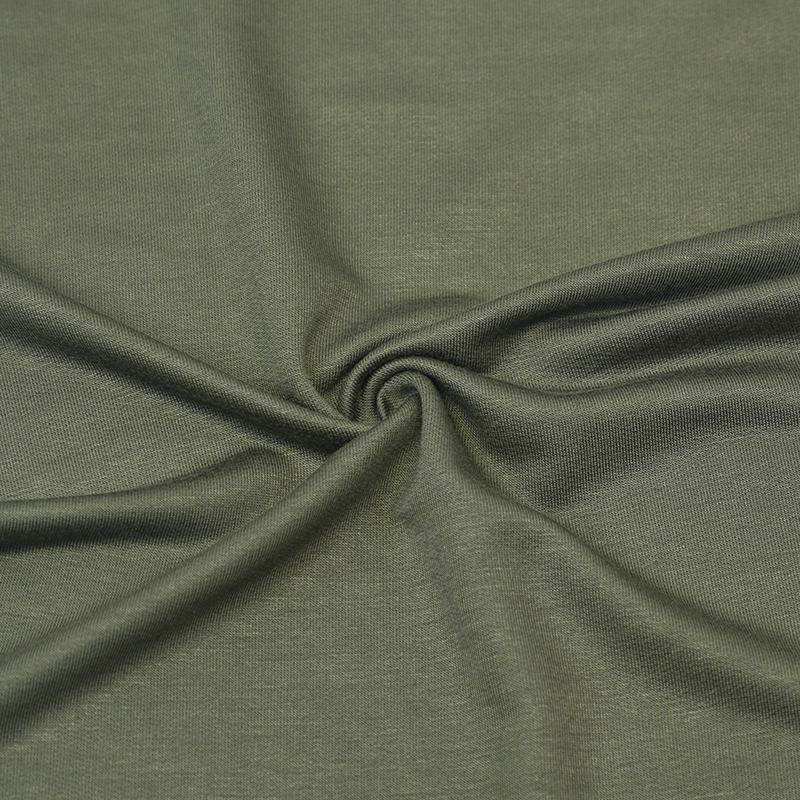 Modal/Polyester Stretch French Terry FabricThis hoodie-weight terry pairs modal with polyester for a softer face than cotton-polyester alternatives while retaining body and shape, making it a solid pick for heavier apparel programs.View Product →
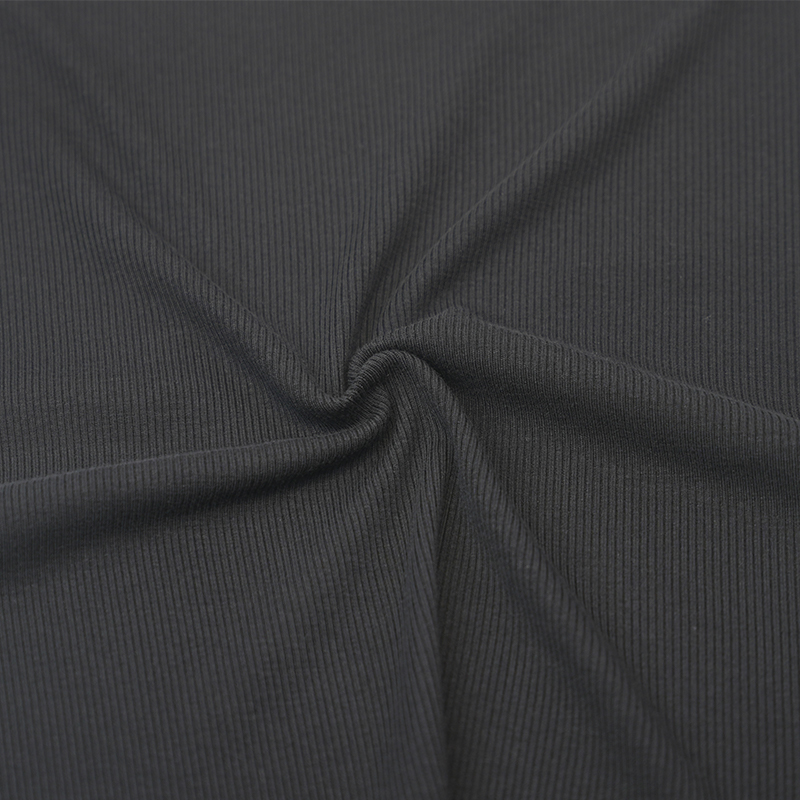
Cotton-modal blends soften the hand of a classic tee or rib program and reduce the shrinkage you would expect from 100 percent cotton. The fabric keeps cotton's familiar matte appearance, which many brands prefer for visible trims such as cuffs and neck ribs.
Lyocell contributes wet strength and a slightly crisper surface, so modal-lyocell jerseys drape well and survive laundering. The combination is frequently chosen for printed jerseys where color depth matters.
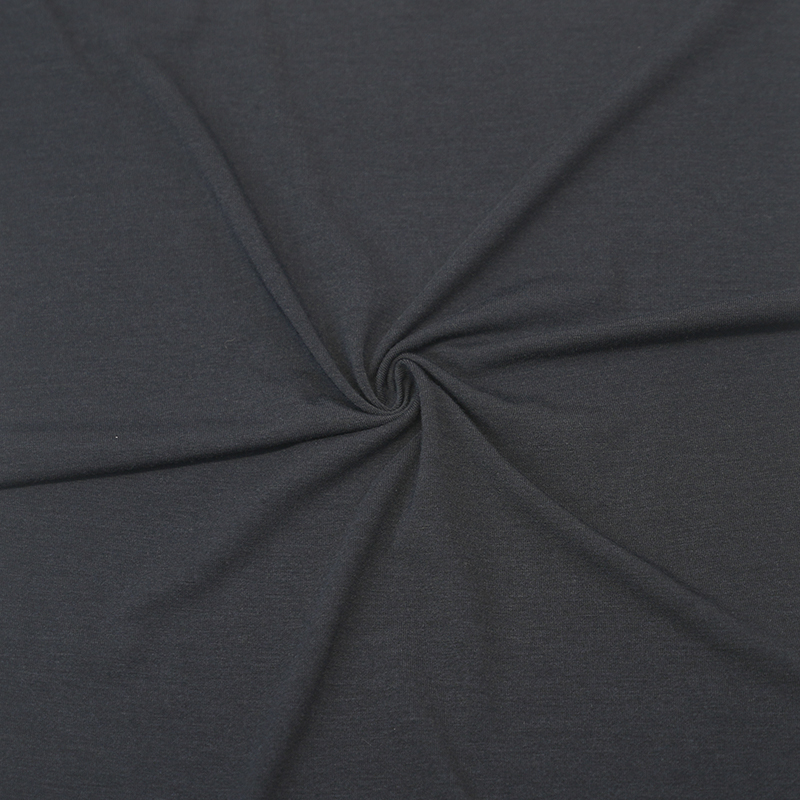
At the premium end, modal smooths the itch of fine wool and stretches the yield of expensive cashmere. A modal cashmere jersey feels cleaner against the skin than cashmere alone and wears better in lightweight sweaters and luxury basics.
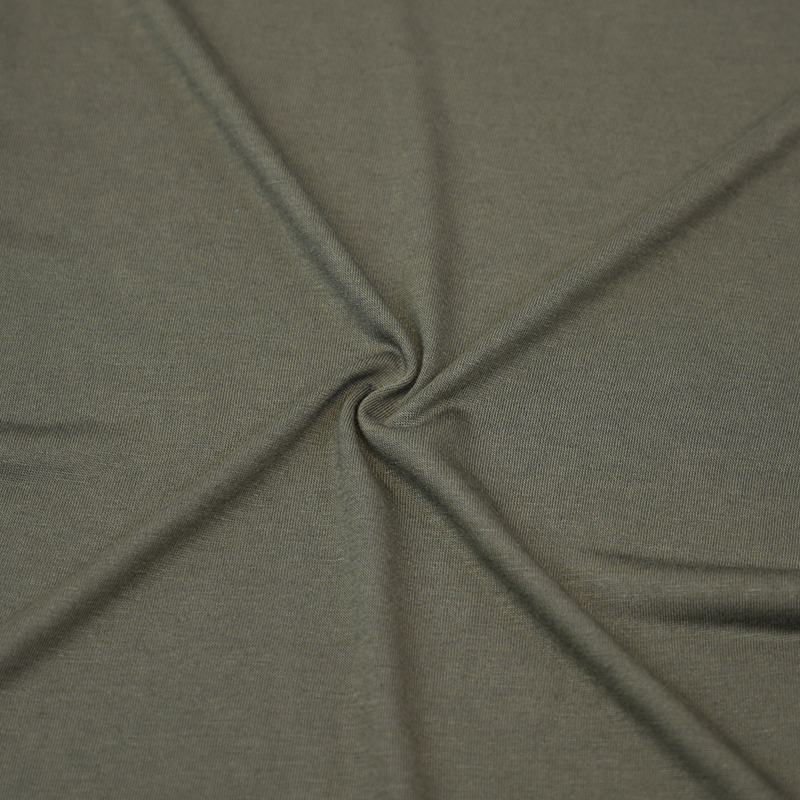 Modal Cashmere Jersey FabricBlending modal with cashmere smooths the fiber's natural itch and improves durability, making it well suited to lightweight sweaters and premium basics where skin feel matters most.View Product →
Modal tolerates machine washing better than delicate natural fibers, but two habits determine its lifespan. First, wash cool or warm on a gentle cycle with mild detergent, and skip chlorine bleach, which weakens cellulose fibers. Second, manage heat: repeated high-temperature tumble drying is the fastest way to introduce shrinkage and dull the hand, so tumble dry low or hang dry where the program allows. Wash garments inside out to limit surface abrasion, and expect a properly specified modal knit to stay within a 5 percent shrinkage envelope across its life.
Modal is easy to specify badly. These line items belong in your contract before the fabric goes into production:
Working with a knitter that documents its supply chain makes those line items enforceable. Nantong Tianhong Textile Technology Co., Ltd. (BAMSILK™), a fabric manufacturer based in Nantong, China, develops modal and modal-blend knits for underwear, tee, and loungewear programs, and records raw-material suppliers, processing steps, and quality-control data within its traceability system, supported by FSC, OCS, and OEKO-TEX Standard 100 certifications.
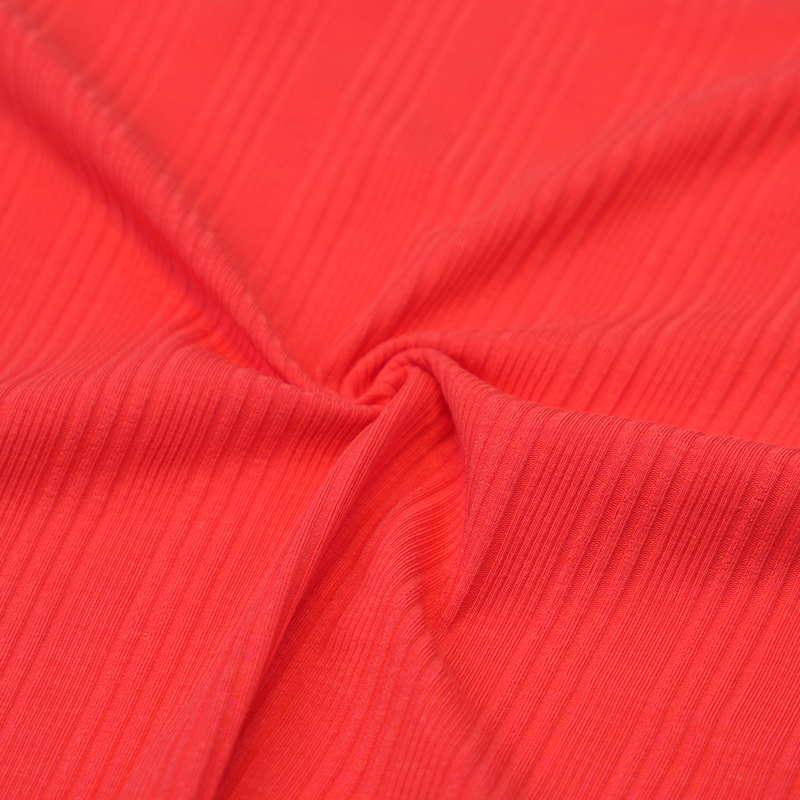 Sustainable Modal Fabric Manufacturer: Nantong Tianhong Textile (BAMSILK)This Nantong-based knitter offers traceable modal and modal-blend fabrics backed by FSC, OCS, and OEKO-TEX Standard 100 certifications, helping brands back their soft-touch claims with documented supply chains.View Product →
Specified that way, modal delivers the soft-touch story your marketing team wants to tell, with fabric that actually supports it wash after wash.
Related Products
Contact Us for More Details
Don't hesitate to contact when you need us!
Contact Information
Add:
Room 806, Building D, Jingyang Plaza, Chongchuan District, Nantong City, Jiangsu Province, China
E-mail:
Product Category
QR Code
Join our community and stay connected
 English
 Español
 Tiếng Việt