Language

2026-08-28
Content
Recycled polyester spandex fleece delivers insulation, stretch, and recovery in a single fabric, while reducing dependence on virgin polyester. It is a weft-knitted structure that combines recycled polyester yarns with elastane filaments and a brushed back, and it has become one of the most requested materials for hoodies, track pants, midlayer jackets, and loungewear.
When a sportswear brand began developing a cold-weather training collection, they came to us with a specific problem. Their design team wanted the warmth of a brushed fleece, but every fleece they had tested felt either too stiff across the shoulders or lost its shape at the cuffs after a few washes. They also needed a sustainability angle that could survive scrutiny from retail compliance teams.
Recycled polyester spandex fleece is a knit fabric made from three functional components. The face uses recycled polyester yarns, chosen for durability and color consistency. The back is brushed into a soft pile that traps still air and creates insulation. Spandex, usually 5 to 12 percent of the composition, is knit into the structure to provide stretch and, more importantly, recovery after stretching.
Picture the fabric in cross section. The face layer is smooth and resists abrasion from zippers, bag straps, and repeated contact with surfaces. The middle layer is the knit structure itself, where spandex filaments run through every course of loops. The back layer is raised into a low pile during brushing. That pile is what creates warmth without heavy weight: still air trapped between fibers conducts heat poorly, so a 280 GSM fleece can feel as warm as a 350 GSM unbrushed knit.
Because the spandex is knit into the fabric rather than applied as a finishing treatment, the stretch survives washing and wear. This is the same construction used in our recycled polyester spandex fleece fabric for hoodies and loungewear, available in custom colors and certified finishes.
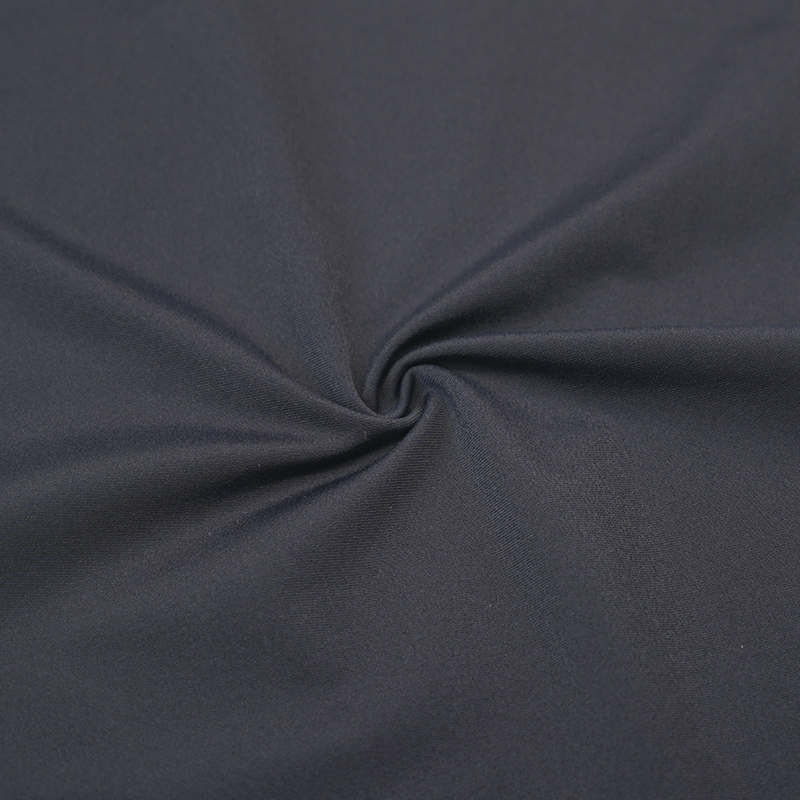 Custom Recycled polyester spandex fleece Suppliers, OEM/ODM CompanyNantong Tianhong Textile Technology Co., Ltd is China custom Recycled polyester spandex fleece suppliers and OEM/ODM company,RECYCLED POL...View Product
Recycled polyester begins with post-consumer PET bottles or post-industrial polyester waste. The material is sorted, cleaned, and processed into chips, which are then melted and extruded into new filament yarns. According to Textile Exchange's Preferred Fiber and Materials Market Report, recycled polyester accounts for approximately 17 percent of global polyester fiber production, a share that continues to grow as apparel brands commit to circular material strategies.
The production sequence matters as much as the fiber itself:
Each step changes how the fabric performs. A poorly heat-set fleece will bag at the elbows. A brushing pass that is too aggressive weakens the surface yarns and causes pilling. A responsible supplier tests after every stage, not just at the end.
In practice, buyers care about five measurable properties: weight, stretch, recovery, pilling resistance, and dimensional stability. The table below shows the targets we hold production to.
| Property | Why it matters | Typical value |
| Weight (GSM) | Determines warmth and drape | 220 to 340 GSM |
| Stretch | Freedom of movement in activewear | 25 to 60 percent, width direction |
| Recovery | Shape retention after stretching and washing | Over 90 percent immediate recovery |
| Pilling resistance | Surface appearance over time | 3 to 4 rating, Martindale method |
| Dimensional stability | Prevents bagging and shrinkage | Under 5 percent shrinkage after five washes |
The most important number in the table is recovery. A fleece that stretches but does not snap back becomes a sagging hem and a distorted collar within a few washes. We routinely test recovery after 30 percent elongation and again after five domestic washes, and we reject lots below a 90 percent recovery threshold. Dimensional stability runs a close second; shrinkage above 5 percent pulls a garment out of spec and generates quality claims at retail.
Plain polyester fleece has a known weakness: it gives, but it does not return. A 100 percent polyester fleece hoodie can fit perfectly at first wear and still stretch out at the cuffs by the third wash. Spandex solves that problem. Elastane filaments act like springs inside the knit, pulling the fabric back to its original dimensions after each stretch and wash cycle.
For fitted garments such as track pants, leggings, and close-cut midlayers, the built-in stretch also eliminates the need for separate stretch panels. That simplifies pattern making, reduces fabric waste, and lowers the finished garment cost. At 5 to 8 percent spandex you get enough two-way stretch for casual wear; at 10 to 12 percent you get four-way stretch for training and high-movement sports.
Recycled polyester has a real but carefully bounded environmental advantage. Because it starts from PET waste that has already been polymerized, it skips the most energy-intensive steps of virgin polyester production: petroleum extraction and raw polymer synthesis. However, recycled polyester remains a synthetic fiber and sheds microfibers during laundering like any other synthetic. The mitigation is partly in fiber quality, longer and stronger filaments shed less, and partly in finishing that binds surface fibers.
The certification landscape is a useful filter. At Nantong Tianhong Textile Technology Co., Ltd. (BAMSILK), our traceability system records raw material suppliers, manufacturing processes, and quality control results, and our certifications include OEKO-TEX Standard 100, OCS, and FSC. These independently verified credentials reduce the compliance burden for our customers. You can review our approach on our sustainability commitments page, or read our comparison of recycled polyester advantages and disadvantages, which also covers durability and softness relative to virgin fiber.
Higher GSM adds garment weight, shipping cost, and drying time in laundering, so choose the lightest weight that still meets your warmth target.
Define the stretch requirement before you define the spandex percentage. A loose-fitting hoodie performs well with 5 to 6 percent spandex. A fitted activewear piece needs 10 to 12 percent and should come with a recovery test report. For this category we offer a sportswear-grade recycled polyester spandex sportswear fleece, tested for repeated use and high-movement fits.
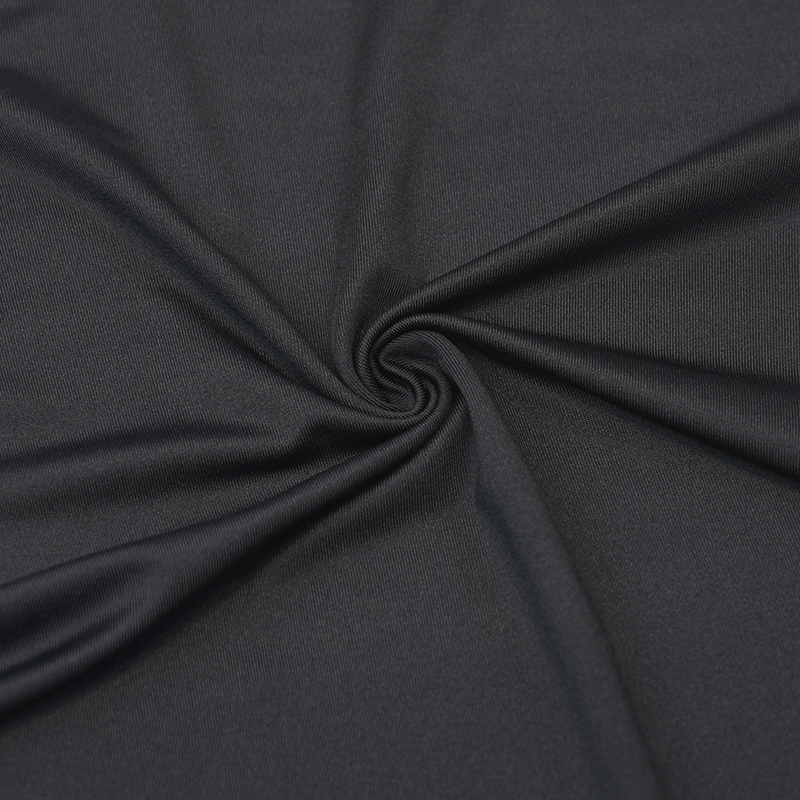 Custom Recycled polyester spandex jersey sportswear fabric Suppliers, OEM/ODMNantong Tianhong Textile Technology Co., Ltd is China custom Recycled polyester spandex jersey sportswear fabric suppliers and OEM/ODM co...View Product
Buyers often overlook that care behavior directly affects fabric choice. A fleece with spandex holds its shape through more wash cycles than a 100 percent polyester fleece, but elastane is also the most sensitive component in the fabric. Prolonged exposure to high drying temperatures, above about 70 degrees Celsius, degrades spandex and reduces recovery over time. We recommend washing at 30 to 40 degrees Celsius and either line drying or tumbling on low heat.
Our testing has documented appearance and performance retention across repeated washing; the details are in our wash durability study on recycled polyester spandex fleece. If machine drying is a requirement in your target market, we can supply a dryable recycled polyester spandex jersey engineered with higher heat tolerance and faster drying performance.
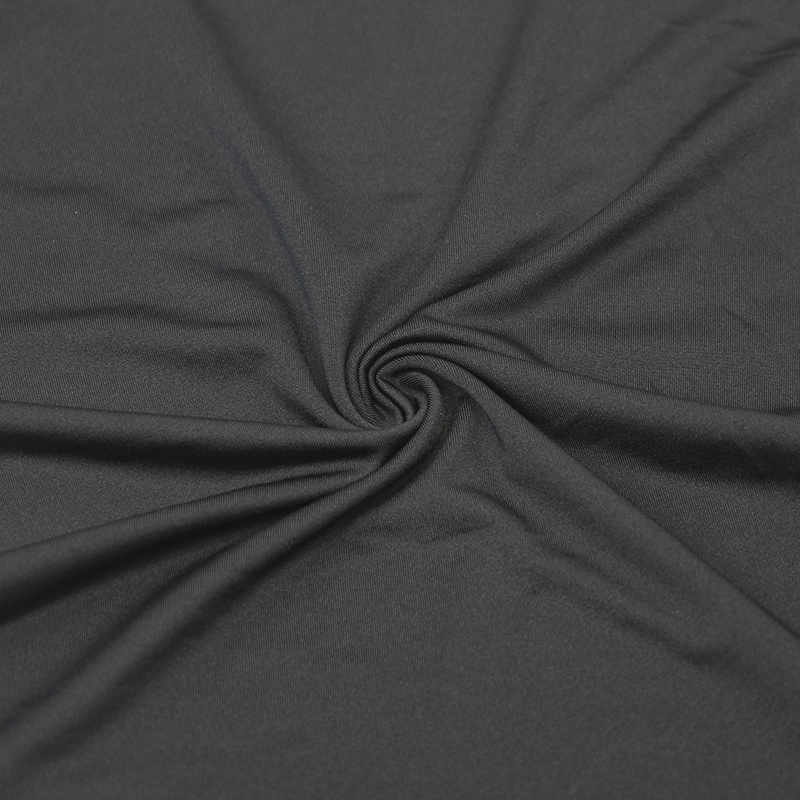 Custom Dryable recycled polyester spandex jersey Suppliers, OEM/ODM CompanyNantong Tianhong Textile Technology Co., Ltd is China custom Dryable recycled polyester spandex jersey suppliers and OEM/ODM company,RECY...View Product
A hand sample proves a concept; it does not prove a production run. Before you commit to bulk, define these five points with your supplier:
For brands with strong sustainability targets, transparency matters as much as the fabric itself. Nantong Tianhong Textile Technology Co., Ltd. (BAMSILK) has been developing and producing performance fabrics for more than two decades from our factory in Nantong, one of China's most established textile clusters. We support the full process, from sample development to bulk delivery, with documentation that makes your own compliance work easier.
Data source: Textile Exchange Preferred Fiber and Materials Market Report
Related Products
Contact Us for More Details
Don't hesitate to contact when you need us!
Contact Information
Add:
Room 806, Building D, Jingyang Plaza, Chongchuan District, Nantong City, Jiangsu Province, China
E-mail:
Product Category
QR Code
Join our community and stay connected
 English
 Español
 Tiếng Việt