Language

2026-08-14
Content
Apparel brands ask us the same question every development season: which knitted fabric delivers the softness their customers expect, prints cleanly, and still supports a credible sustainability story? In most cases, our answer is printed lyocell jersey fabric. A lyocell single jersey takes color and pattern evenly, drapes smoothly against the body, and performs consistently through production when the right quality controls are in place. This guide explains what printed lyocell jersey is, how it behaves during printing, and what to review before you approve a bulk order.
Printed lyocell jersey is a weft-knitted single jersey fabric made from lyocell yarns and finished with a printed pattern. Two features make it distinctive: the fiber and the knit construction.
Lyocell is a regenerated cellulose fiber produced from wood pulp, typically sourced from eucalyptus and other fast-growing trees. The pulp is dissolved in an amine oxide solvent, extruded through fine spinnerets, cut into staple fiber, and spun into yarn. Unlike some other regenerated cellulosic fibers, lyocell is manufactured in a closed-loop process in which the solvent is captured and reused rather than discharged.
The jersey construction, a plain weft knit with a smooth face and a slightly textured back, gives the fabric natural stretch and recovery even before elastane is added. The smooth face creates an even substrate for ink or dye, which is why printed lyocell jersey performs well for patterns ranging from fine florals to bold geometric designs. If you are mapping out your options, our lyocell jersey fabric collection covers the weights and blends we routinely supply to apparel brands.
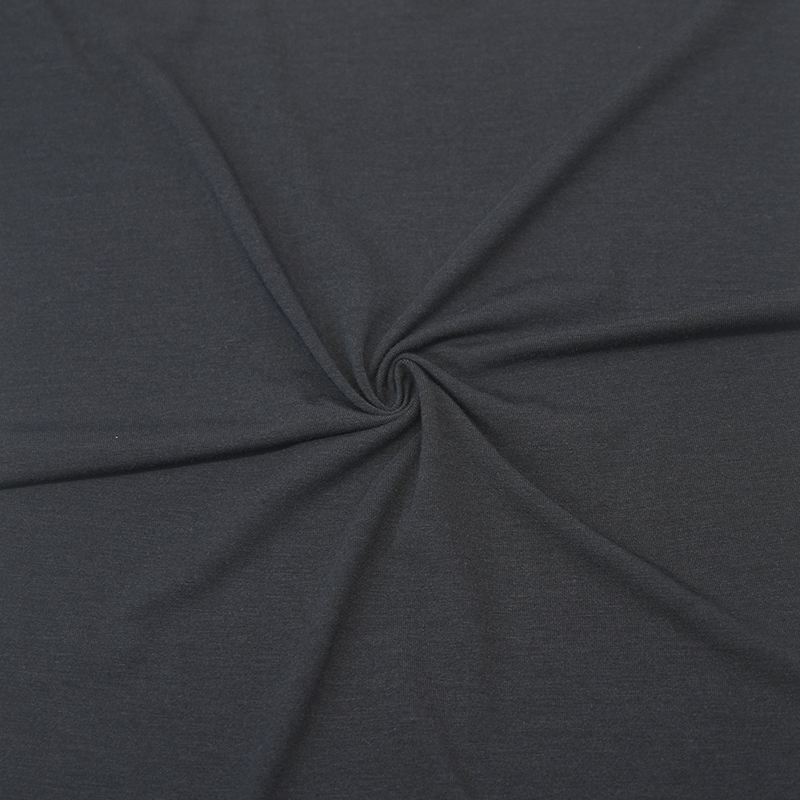
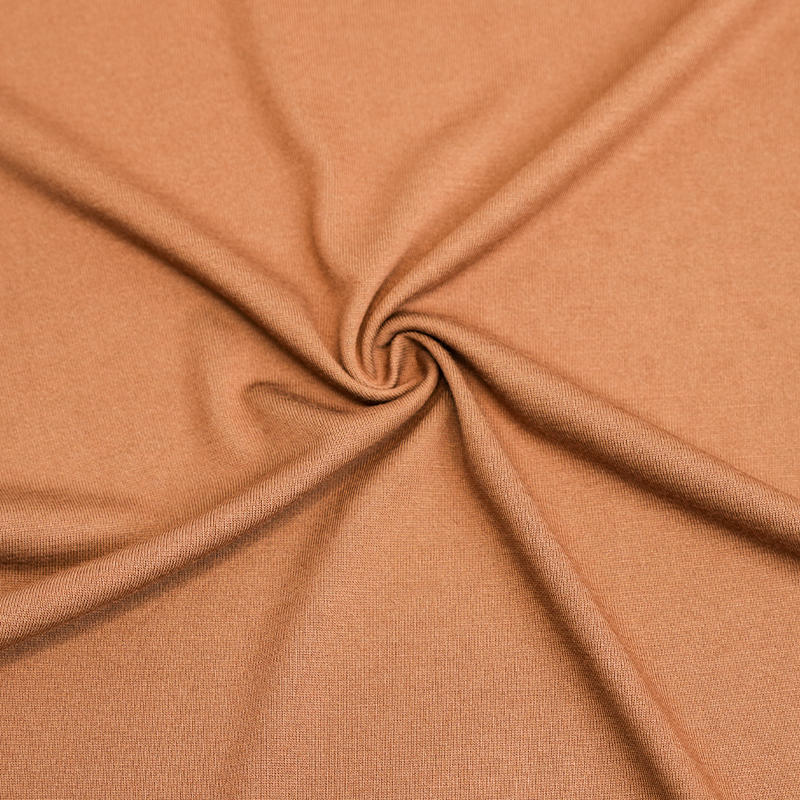
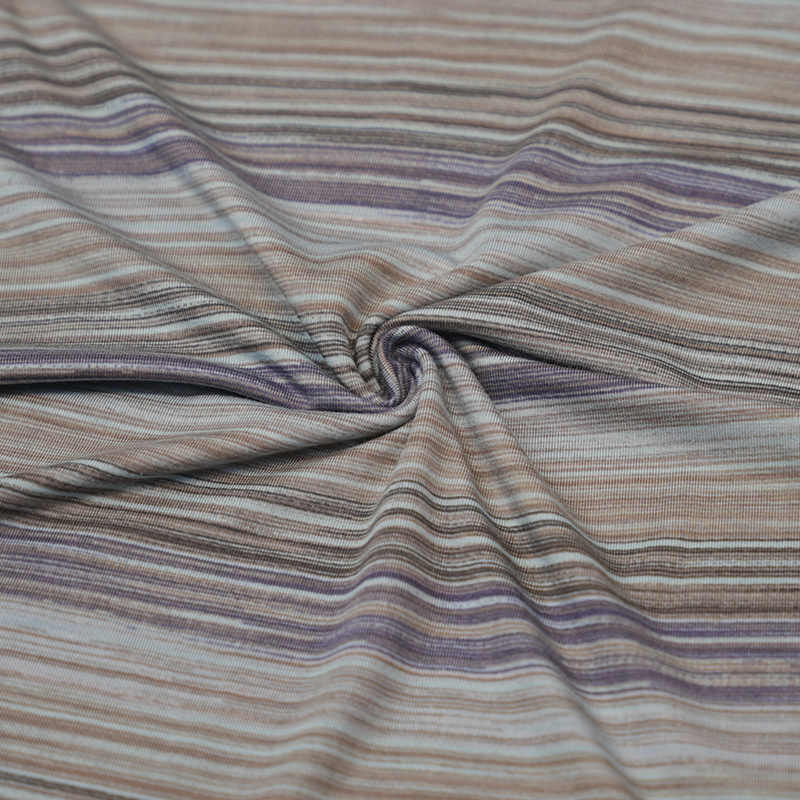 Wholesale Sustainable Lyocell Fabric Manufacturers, FactoryNantong Tianhong Textile Technology Co., Ltd. is China sustainable lyocell fabric manufacturers and sustainable lyocell fabric factory, o...View Product →
The commercial case for printed lyocell jersey rests on three properties: comfort, breathability, and print quality. We examine each in turn.
Lyocell jersey is frequently compared with cotton jersey for comfort, but the hand feel is silkier and more fluid. The fiber's round cross-section and smooth surface reduce friction against skin, which is why many clients specify it for underwear and loungewear. It is also an easier surface for printing than textured knits, because there is less fiber interruption to distort a pattern.
Because lyocell is a cellulosic fiber, it absorbs moisture readily and releases it quickly. In jersey form, the fabric does not feel clammy during wear and supports temperature regulation in warm or transitional weather. One clarification matters for product claims: lyocell does not have inherent antibacterial properties. Any antimicrobial performance would require an additional finish, so we recommend describing this fabric as soft and breathable rather than antibacterial.
Lyocell accepts dyes well and produces deep, saturated shades. On printed jersey, this translates into sharp pattern edges and good wash fastness when the dye class and fixation process are matched to the fiber. The fabric also falls beautifully, which makes it suitable for dresses and flowing tops, not only close-fitting basics.
| Fiber | Hand feel | Moisture behavior | Print clarity | Production note |
| Lyocell | Silky, smooth, fluid | High absorbency, quick release | Excellent | Closed-loop solvent recovery |
| Cotton | Soft, familiar | Absorbent, slower drying | Good | Crop-based natural fiber |
| Bamboo viscose | Soft, drapable | Absorbent | Good | Chemically processed; label as bamboo viscose |
| Modal | Soft, stable | Good absorbency | Good | Regenerated cellulose, often blended with spandex |
Printing on lyocell jersey is not complicated, but it rewards preparation. A supplier who controls fabric dimension from the start will save you from the most common failure modes: distorted patterns, strike-through, and poor wash fastness.
Greige lyocell jersey should be scoured to remove spinning and knitting lubricants and pre-shrunk so the fabric is dimensionally stable before pattern registration. Many mills also heat-set or lightly calender the fabric to level the printing surface. Ask your supplier for shrinkage data before approving a print program; this is the single most useful number to request.
Both pigment printing and reactive printing are used on lyocell jersey. Pigment printing is economical and adequate for simple designs. Reactive printing bonds with the cellulosic fiber, giving a softer hand feel and better wash fastness, which matters for garments that will be laundered frequently. Because lyocell is a cellulosic fiber, dye penetration is good; the printing team simply needs to control paste viscosity and drying temperature to avoid strike-through or fiber damage.
If you are also comparing printed options in other fibers, our printed organic bamboo spandex jersey fabric offers similar drape with a different hand feel. Note that bamboo viscose is produced by a chemical viscose process, so it should always be described and labeled as bamboo viscose; when the bamboo is organically grown, the correct description is viscose derived from organically grown Bamboo. In either case, it is a regenerated fiber, not a mechanically processed natural fiber.
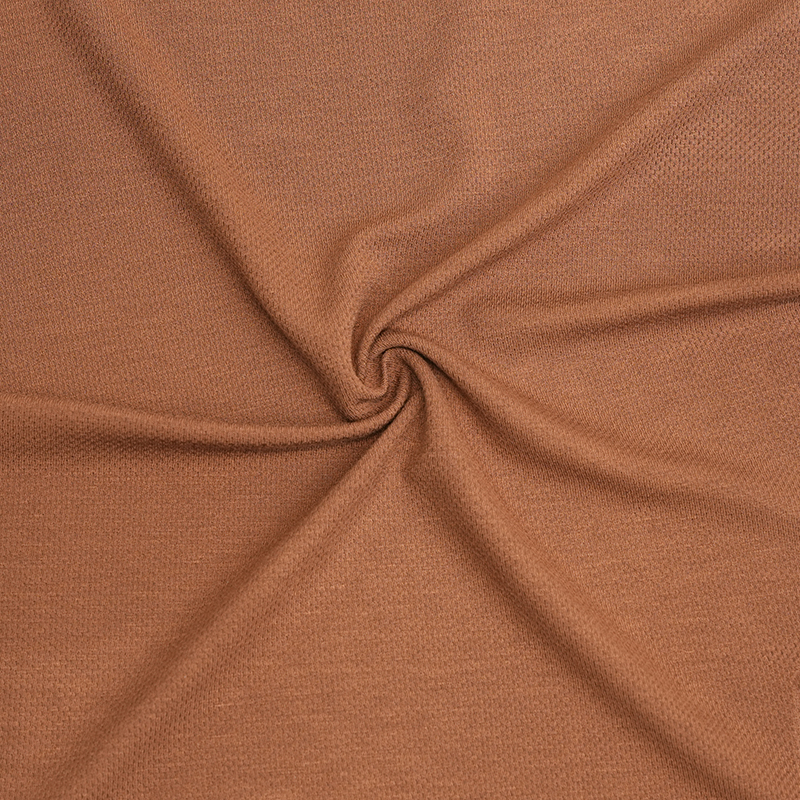
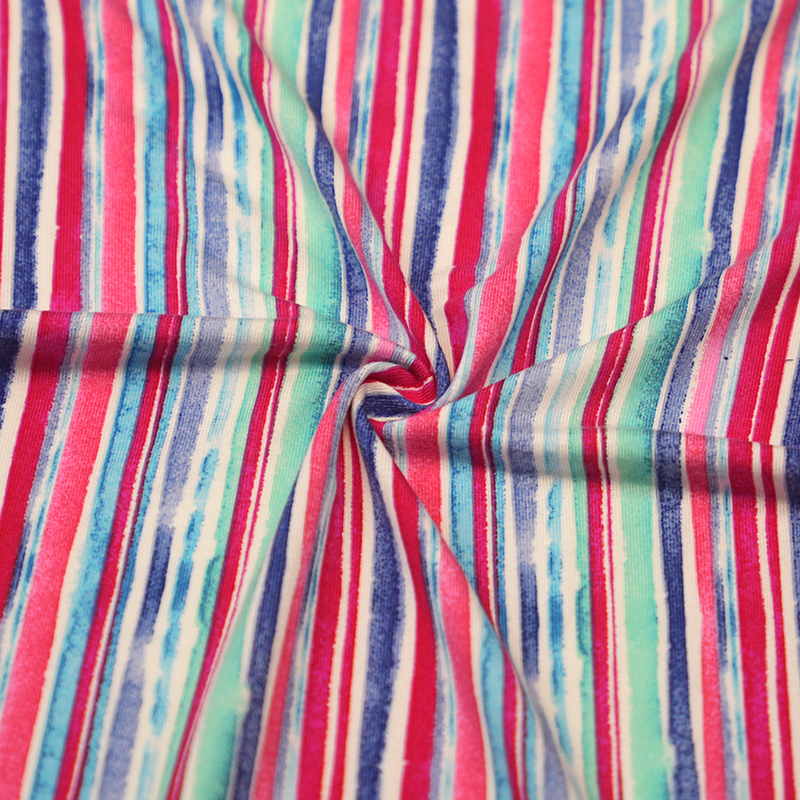 Custom Organic bamboo/spandex printed jersey fabric Suppliers, OEM/ODM Company -Nantong Tianhong Textile Technology Co., Ltd is China custom Organic bamboo/spandex printed jersey fabric suppliers and OEM/ODM company,V...View Product →
GSM drives both hand feel and print behavior. Lightweight jerseys around 120-150 gsm suit shirts and dresses; mid-weight fabrics around 150-180 gsm work well for T-shirts and tops; heavier 180-220 gsm options support structured loungewear. Print paste sits differently on each, so confirm the print style against the final weight. For stretch, lyocell/spandex blends provide better recovery, while 100 percent lyocell jersey relaxes more over a day of wear. If shape retention is a priority, evaluate a lyocell spandex jersey fabric alongside the 100 percent version.
FSC certification confirms that the wood pulp comes from responsibly managed forests. OEKO-TEX Standard 100 validates the finished fabric against restricted substance limits. Both are expected by retailers and increasingly by consumers. At Nantong Tianhong Textile Technology Co., Ltd. (BAMSILK™), we have developed and manufactured sustainable knitted fabrics for more than two decades, and our supply chain operates under FSC, OCS, and OEKO-TEX Standard 100 certification.
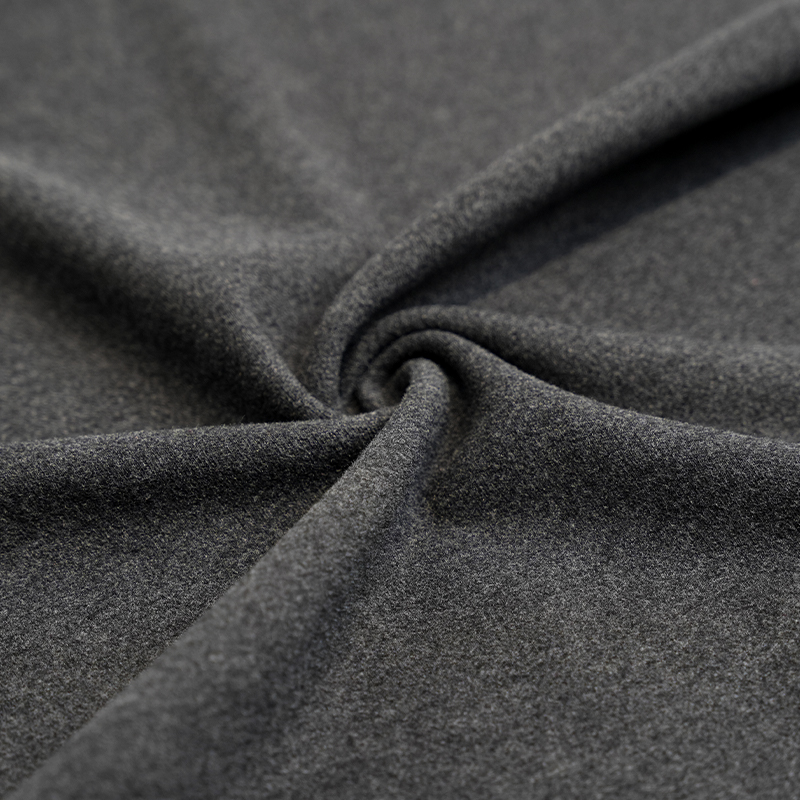
For cooler programs, lyocell wool jersey fabric adds warmth while retaining the print surface that makes lyocell knitwear popular. It is a practical way to extend one print story across autumn and winter collections.
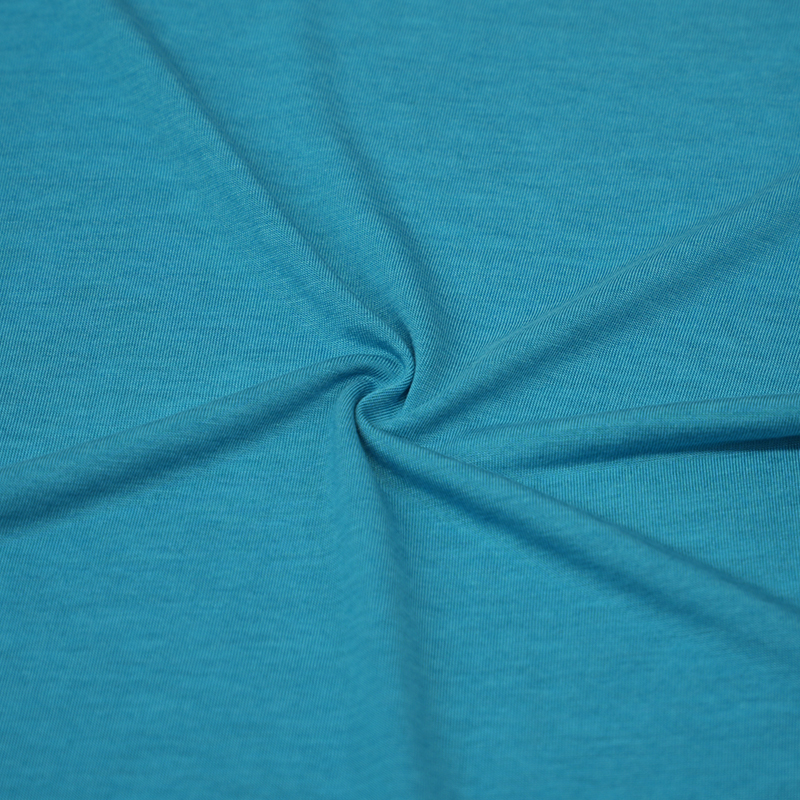 Custom Lyocell wool jersey fabric Suppliers, OEM/ODM Company - Nantong TianhongNantong Tianhong Textile Technology Co., Ltd is China custom Lyocell wool jersey fabric suppliers and OEM/ODM company,WOOL Warmth Wool's ...View Product →
Our customers use printed lyocell jersey across several apparel categories:
Softness against skin and breathability make it a dependable base-layer choice, particularly in printed lyocell jersey fabric for underwear.
The smooth face keeps prints sharp and the drape suits relaxed silhouettes.
Fluid movement and color depth work well for all-over and placement prints.
Comfort and easy care align with the category's emphasis on softness.
Before you place a bulk order, request shrinkage and colorfastness test reports, approve a physical pre-production sample, and confirm that the print method matches your end-use care label. Bulk consistency depends on disciplined mill controls: roll-to-roll shade variation, print registration, and residual shrinkage should all be measured against the approved sample. Finished rolls should also carry clearly documented fiber content, so your labeling is accurate from the start.
Printed lyocell jersey is durable when processed correctly. Lyocell has high wet strength compared with many cellulosic fibers, so it resists damage in laundering. Washability depends on finishing: a well-scoured, pre-shrunk, and correctly printed fabric holds color through repeated washes at 30 or 40 degrees. Test a sample against your chosen care instructions before committing to bulk.
When every yard has to meet a brand standard, start with a supplier who documents the full chain from fiber to finished roll. Our team in Nantong develops and manufactures sustainable knit fabrics for global apparel programs. If you are evaluating options for your next collection, contact our technical team to discuss your print project.
Related Products
Contact Us for More Details
Don't hesitate to contact when you need us!
Contact Information
Add:
Room 806, Building D, Jingyang Plaza, Chongchuan District, Nantong City, Jiangsu Province, China
E-mail:
Product Category
QR Code
Join our community and stay connected
 English
 Español
 Tiếng Việt