Language

2026-07-31
Content
Synthetic fibers like polyester and nylon wick moisture and dry fastest, because they absorb almost no water into the fiber itself and instead move sweat along engineered surface channels to evaporate. Natural and semi-synthetic fibers such as cotton, bamboo viscose, modal, and wool behave very differently, since they pull moisture into the fiber core rather than moving it along the surface, which is why a "moisture-wicking" claim on a tee shirt tag can mean very different things depending on what the fabric is actually made from.
Choosing the right fabric for a fast-drying, sweat-managing tee shirt is not simply a matter of picking the most breathable-sounding material. It comes down to understanding two separate properties, how much moisture a fiber absorbs and how quickly it moves that moisture to a surface where it can evaporate, and those two properties do not always move together. This guide breaks both down, compares the fabric families most commonly used in tee shirts today, and lays out how construction and laundry habits change performance just as much as fiber choice does.
Two separate physical properties get bundled together under the single label "moisture wicking," and untangling them explains most of the confusion around which fabrics genuinely perform. The first is absorbency, how much water a fiber pulls into its own internal structure. The second is wicking, the transport of liquid along a fiber's surface through capillary action, independent of how much the fiber absorbs.
This is also why moisture regain alone can be misleading. A fiber that absorbs more water is not automatically better at keeping skin dry, since absorption and transport pull in opposite directions: a fiber built to hold moisture inside its structure is, almost by definition, working against fast evaporation at the surface.
Moisture regain measures how much water a fiber absorbs relative to its own dry weight under standard conditions. It is one of the most cited numbers in fiber comparisons, and the spread between fiber types is large enough to explain a lot of real-world fabric behavior on its own.
Polyester's near-zero regain is exactly why it dries so fast, there is almost no water trapped inside the fiber that needs to evaporate in the first place. Cellulosic fibers like bamboo viscose, modal, and cotton sit at the opposite end, holding a meaningful amount of water inside their structure. Wool is the outlier, since its unique dual-layer structure lets it absorb a large amount of moisture vapor into its core while still keeping its outer surface feeling comparatively dry.
| Fabric Family | How It Handles Moisture | Drying Speed | Typical Tee Use |
| Polyester / Nylon | Resists absorption, moves sweat along engineered surface channels | Fastest | Athletic and performance tees |
| Poly-Cotton or Poly-Modal Blends | Synthetic content carries moisture while natural content softens hand feel | Fast to moderate | Everyday active tees, gym-to-street styles |
| Merino Wool | Absorbs vapor into a hydrophilic core behind a drier outer surface | Moderate | Base layers, odor-sensitive activewear |
| Bamboo Viscose / Modal | Absorbs a meaningful amount of moisture into the fiber itself | Moderate to slow | Soft everyday tees, loungewear-style basics |
| Cotton | Absorbs moisture readily and holds it rather than moving it along | Slowest | Casual, low-intensity everyday wear |
Two tees made from the exact same fiber can perform very differently once construction is factored in. Fiber content sets the baseline, but yarn shape, knit density, and finishing treatments often move performance just as much.
Plotting common tee shirt fabrics by softness against wicking and drying speed makes the underlying trade-off easy to see at a glance. Fabrics rarely score high on both at once, and most sourcing decisions come down to which side of this chart matters more for a specific product.
Performance polyester sits furthest toward fast drying but generally trades away some of the soft, skin-friendly feel natural fibers offer. Bamboo viscose and modal sit at nearly the opposite end, prized for softness but slower to fully dry once wet. Blended fabrics exist specifically to pull a fiber combination toward the upper right of this chart, borrowing speed from a synthetic component and softness from a natural one.
The right answer to "what fabric wicks moisture and dries fastest" depends heavily on what the tee is actually for, since the fastest-drying option is not always the most comfortable or most appropriate one for every use case.
For high-intensity training, running, or any activity producing heavy, sustained sweat, a performance polyester or poly-blend mesh remains the most reliable choice, since fast evaporation is the primary functional requirement. For everyday active wear, gym-to-street tees, or travel basics where moderate sweat management matters but all-day comfort matters just as much, a poly-cotton or poly-modal blend tends to strike the most practical balance. For casual, low-intensity wear where softness, drape, and a natural hand feel are the priority and heavy sweat management is not the primary concern, cellulosic options like bamboo viscose or modal jersey remain a strong, comfortable choice even though they will not out-dry a technical synthetic.
The poly-blend category in the chart above is not just a theoretical middle ground, it is where a lot of real production fabric actually lives. Pairing bamboo viscose with a hydrophobic synthetic fiber is a common way mills engineer a jersey that keeps a soft, natural-feeling hand while pulling wicking and drying performance closer to a technical fabric than bamboo viscose could achieve on its own.
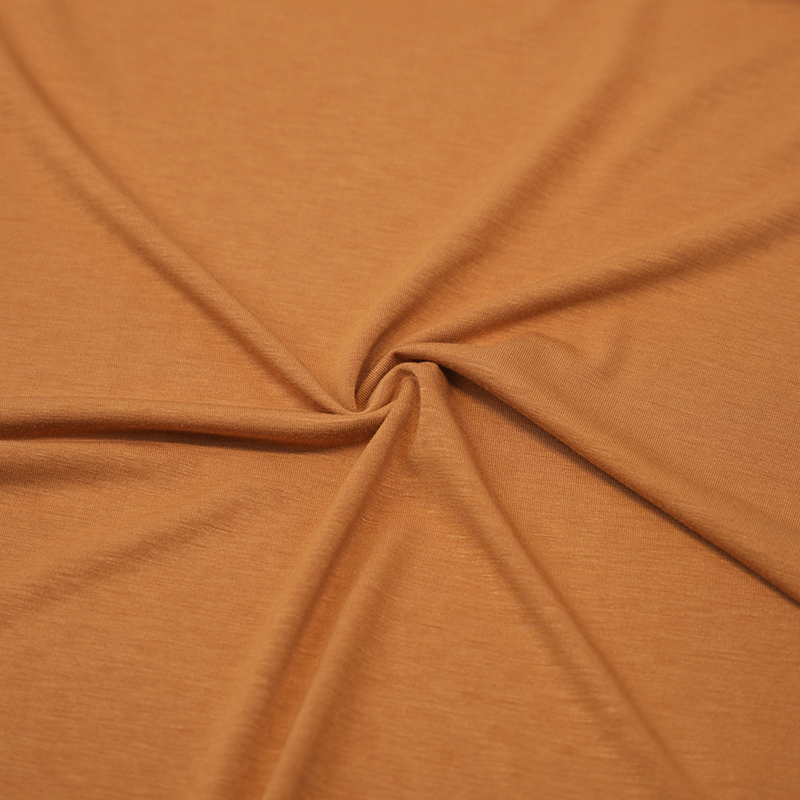
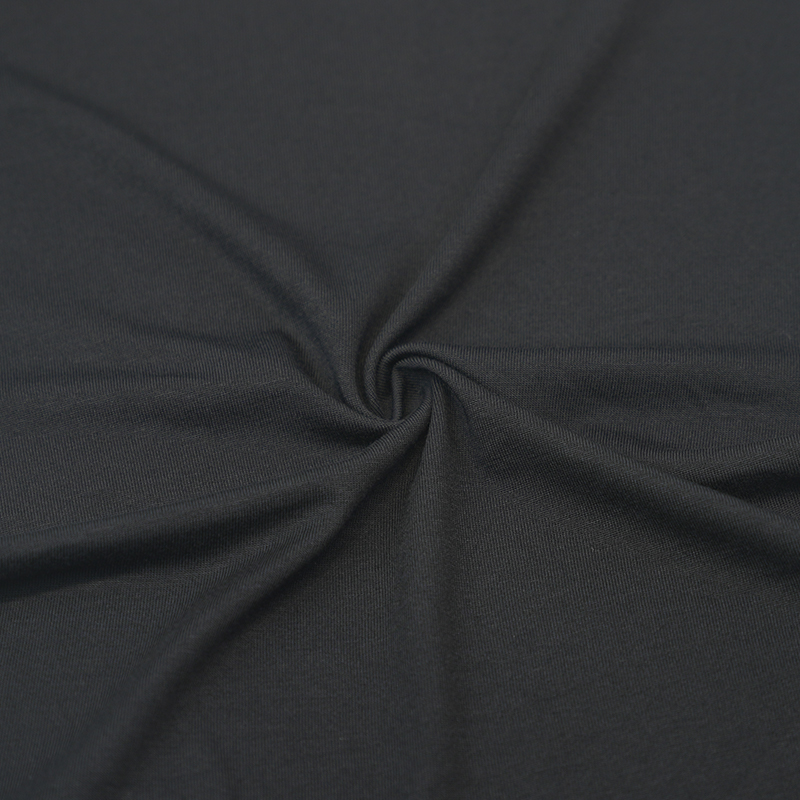
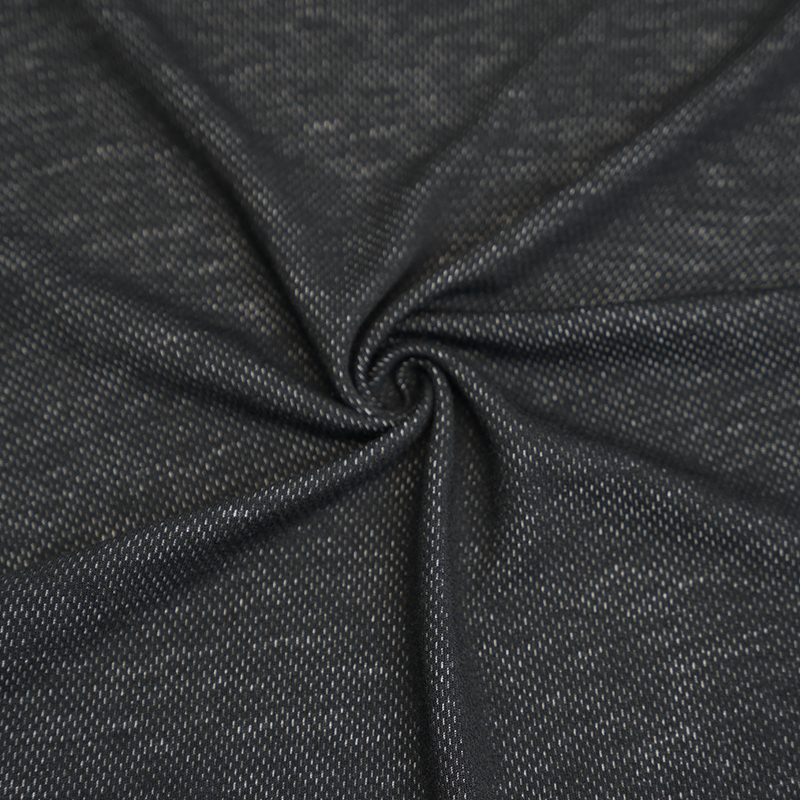
Moisture management and odor control are closely related but not identical. Polyester's oil-attracting surface chemistry means it can hold onto certain odor-causing compounds more stubbornly than natural fibers do, even though it dries faster overall, which is why some heavily worn synthetic activewear develops a persistent smell over time despite performing well on the wicking side. Wool's structure gives it a natural advantage here, since its fiber chemistry tends to bind odor-causing compounds less readily. Cellulosic fibers like cotton, bamboo viscose, and modal generally sit in the middle, neither trapping odor the way heavily worn polyester can nor resisting it as effectively as wool.
Fiber and construction set the ceiling for how well a tee can wick and dry, but everyday laundry habits determine whether a garment keeps performing anywhere near that ceiling over time. One habit causes more damage to wicking performance than almost any other.
Founded in 2001, Nantong Tianhong Textile Technology Co., Ltd. (BAMSILK™) is a specialized manufacturer of sustainable, high-performance natural fiber fabrics, integrating R&D, production, and global sales. Located in Nantong, one of China's key textile hubs, Tianhong benefits from a well-established industrial ecosystem that ensures efficient sourcing, streamlined manufacturing, and reliable delivery under strict quality control. Sustainability is central to Tianhong's operations, supported by certifications including FSC, OCS, and OEKO-TEX Standard 100, with ongoing development of natural and blended fiber solutions, including bamboo viscose, for apparel partners worldwide.
Moisture regain figures referenced in this article are standard commercial values as defined by ASTM D1909, Standard Tables of Commercial Moisture Regains for Textile Fibers, the internationally recognized reference used across the textile industry for fiber moisture comparisons.
Related Products
Contact Us for More Details
Don't hesitate to contact when you need us!
Contact Information
Add:
Room 806, Building D, Jingyang Plaza, Chongchuan District, Nantong City, Jiangsu Province, China
E-mail:
Product Category
QR Code
Join our community and stay connected
 English
 Español
 Tiếng Việt