Language

2026-11-27
Content
A 2-way stretch fabric stretches in one direction, usually across the width, while a 4-way stretch fabric stretches both across the width and along the length. Choose 2-way for stable garments that need comfort in one direction, such as basic tees and loungewear tops, and 4-way for close-fitting, high-movement garments such as activewear, swimwear and leggings. Knit fabrics with spandex usually stretch to some degree in both directions, so the difference is often in how much and how evenly.
| Feature | 2-Way Stretch | 4-Way Stretch |
| Direction of stretch | One direction, usually the crosswise direction | Crosswise and lengthwise |
| Typical construction | Woven with spandex in one yarn direction, or knits with limited lengthwise stretch | Knits and spandex blends that stretch in both directions |
| Freedom of movement | Good in one direction | Good in all directions |
| Fit | Relaxed to fitted | Close and body-hugging |
| Typical spandex share | Lower | Often higher, depending on the use |
| Common uses | Tees, loungewear, casual tops and trousers | Activewear, swimwear, leggings, underwear |
| Pattern cutting | Cut with the stretch direction in mind | More forgiving, since it stretches both ways |
These are general definitions. Different mills and buyers use the terms loosely, so always ask for the actual stretch figures in each direction.
In a 2-way stretch fabric, the stretch runs in one direction, typically across the width of the fabric. The other direction stays stable, which helps a garment hold its length and shape.
A 4-way stretch fabric moves both across and along the length. In knits this comes from the loop structure plus spandex, which lets the fabric stretch and recover in both directions.
The terms 2-way and 4-way only say direction. The two figures that actually decide performance are how far the fabric stretches and how well it returns.
| Measure | What It Tells You |
| Stretch percentage | How far the fabric extends before reaching its limit, for each direction |
| Recovery | How well the fabric returns to its original size after being stretched |
| Growth | Permanent extension left after repeated stretching, which shows up as bagging |
| Spandex content | Gives stretch and recovery, but the knit and yarn also matter |
A fabric can stretch a lot and still recover badly. For fitted garments, ask for both stretch and recovery in each direction.
The product pages list the spandex share but do not state whether each fabric is 2-way or 4-way, so confirm the stretch figures with your sample.
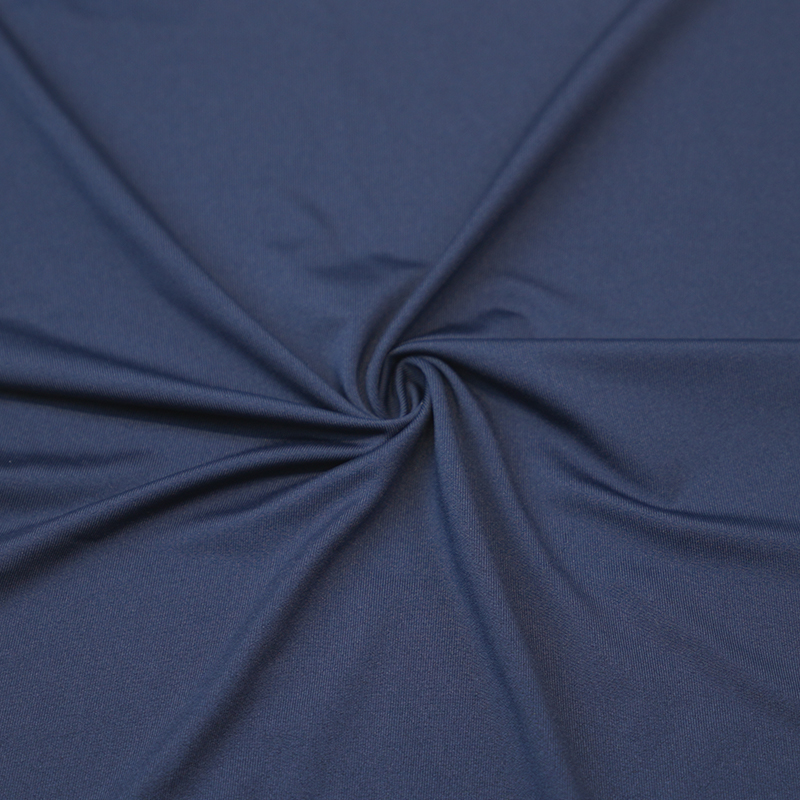 Recycled Polyester Spandex Jersey92% recycled polyester and 8% spandex at 160 GSM, for T-shirts, underwear and sportswear.
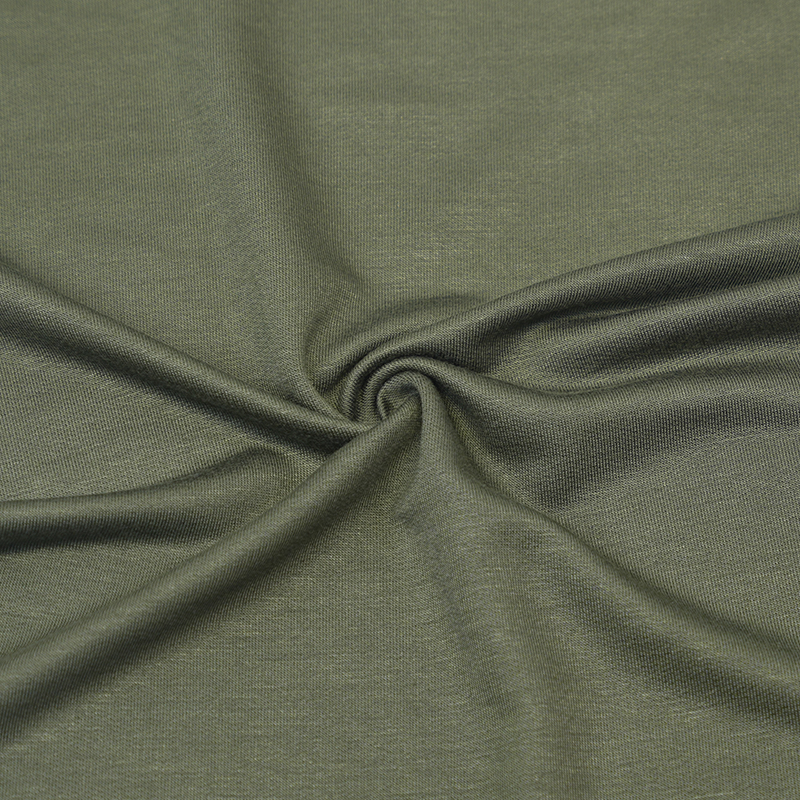
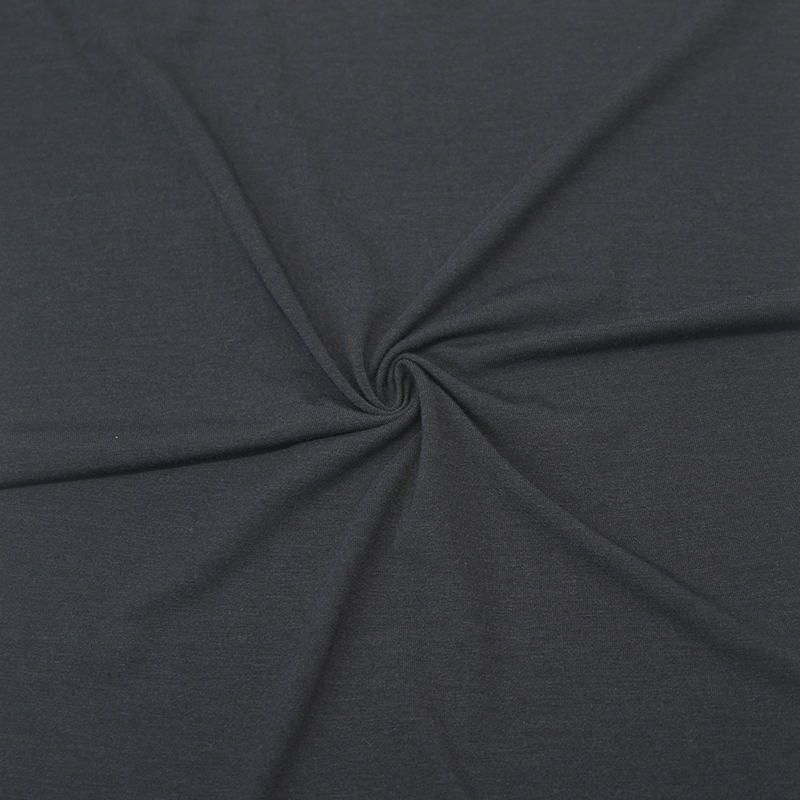 Bamboo Viscose/Thermolite Stretch Interlock56.5% bamboo viscose, 37.5% thermolite and 6% spandex at 290 GSM, for loungewear.
 Nylon Spandex Interlock80% nylon and 20% spandex at 205 GSM, for activewear, swimwear and underwear.
| Garment | Better Choice | Why |
| Basic T-shirt | 2-way or light 4-way | Stable length with comfortable width stretch |
| Loungewear | 2-way or light 4-way | Relaxed fit, moderate movement |
| Activewear and leggings | 4-way | Needs freedom in every direction |
| Swimwear | 4-way with strong recovery | Close fit and shape retention |
| Underwear | 4-way | Moves with the body |
| Structured tops and trousers | 2-way | Holds shape and length |
For example, an 80% nylon, 20% spandex interlock is typical of the higher-stretch end for activewear and swimwear, while an 8% spandex jersey suits tees and sportswear.
Spandex share gives a rough guide to stretch level, though the knit and the main fiber also matter. These ranges are typical industry ideas, not rules.
| Spandex Share | Typical Feel | Typical Use |
| About 3 to 5% | Light comfort stretch | Casual tops, loungewear, some trousers |
| About 6 to 10% | Moderate stretch and good recovery | T-shirts, sportswear, underwear |
| About 12 to 20% or more | High stretch and strong recovery | Activewear, swimwear, shaping garments |
The listed fabrics sit at different points on this scale, at 6%, 8% and 20% spandex, and they come from different knit constructions.
A pattern made for a stable fabric will not fit properly in a high-stretch fabric, so test a fit sample whenever you change stretch level.
Each of these is cheaper to catch at the sample stage than after bulk production.
The terms 2-way and 4-way come from woven fabrics, where stretch is added with spandex in one yarn direction or in both. Knits are different, because the looped structure already gives crosswise stretch and some lengthwise stretch even without spandex.
This is why a jersey or interlock with a few percent spandex often behaves like a 4-way stretch fabric, while a woven with spandex in the weft only behaves like a 2-way stretch. The words are the same, but the structure behind them is not, so compare knits with knits when you set a specification.
If the swatch does not return to its original size, the garment is likely to bag at the knees, elbows and seat.
The product pages state that fabric communication is completed within 3 days and sample production within 15 days. For related reading, see our guide on nylon spandex interlock fabric and the bamboo viscose polyester jersey guide.
2-way stretch moves in one direction, usually across the width. 4-way stretch moves across the width and along the length.
No. It suits close-fitting, high-movement garments, while 2-way suits stable garments that must hold their length and shape.
More spandex usually increases stretch, but recovery, knit structure and yarn also matter.
Stretch a swatch in both the crosswise and lengthwise directions and measure each. Ask the supplier for tested figures.
4-way stretch with strong recovery, because the garment must move freely in every direction and keep its shape.
Related Products
Contact Us for More Details
Don't hesitate to contact when you need us!
Contact Information
Add:
Room 806, Building D, Jingyang Plaza, Chongchuan District, Nantong City, Jiangsu Province, China
E-mail:
Product Category
QR Code
Join our community and stay connected
 English
 Español
 Tiếng Việt