Language

2026-07-17
Content
There is no single fabric that wins for every loungewear piece, because loungewear itself covers very different products, from fitted jersey tees to oversized hoodies to slip-style dresses. What can be said with confidence is that the strongest performers share four traits: a soft, next-to-skin hand feel, dependable breathability, enough stretch and recovery to move with the body, and a weight that matches how the garment will actually be worn. Judged against those traits, bamboo and cotton stretch jersey, modal-rich blends, and brushed French terry consistently come out ahead of plain cotton or straight polyester knits.
For brands and sourcing teams, the more useful question is usually not "what is the single best fabric" but "which of these strong options fits this specific product." This guide breaks the decision down by criteria, weight, knit structure, and sourcing checklist, so the choice can be made deliberately rather than by default.
Loungewear is worn for extended stretches of time, often against bare skin, and often for both sitting still and moving around the house. That combination puts different demands on a fabric than activewear or outerwear does, and it explains why the criteria below matter more here than raw durability or technical performance.
Most loungewear collections draw from a short list of fabric families, each with a distinct feel and a distinct reason to choose it. The comparison below covers the four that show up most often in loungewear sourcing conversations.
| Fabric Family | Hand Feel | Breathability | Best Suited For |
| Bamboo/cotton stretch jersey | Very soft, silky surface | High, with natural moisture movement | Fitted tees, joggers, everyday lounge sets |
| Modal-rich blends | Smooth, lightweight, slightly cool to the touch | High, dries quickly against skin | Ribbed pieces, camisoles, warm-climate loungewear |
| Brushed French terry | Plush looped interior, smooth face | Moderate, better suited to cooler settings | Hoodies, joggers, cold-weather lounge sets |
| Cotton-spandex jersey | Familiar, natural cotton feel | Moderate to high depending on knit | Budget-friendly basics, high-volume programs |
Weight, measured in GSM, has as much influence on comfort as fiber content does. Two fabrics made from the exact same blend can feel completely different once one is knit light and airy and the other is knit dense and substantial, and matching weight to the product's purpose is one of the most overlooked steps in fabric selection.
These two knit structures dominate the loungewear category, and the choice between them usually comes down to the mood a brand wants a piece to communicate rather than any single fabric being objectively superior.
A single-layer flat knit that hugs the body and moves fluidly, giving loungewear a fitted, almost second-skin feel. Its lighter structure makes it the natural choice for fitted tees, camisoles, and lounge dresses where drape matters more than bulk.
A looped, textured interior paired with a smooth exterior face, giving loungewear a cozier, more structured silhouette. The looped backside traps a layer of air, which is why French terry reads as warmer and more substantial than a plain jersey of similar composition.
Among the options compared above, bamboo and cotton stretch jersey has become the fabric brands reach for first when softness and everyday wearability are the priority. Bamboo-derived viscose fiber has a naturally fine, rounded cross-section that gives finished fabric an unusually smooth surface, and blending it with cotton adds structure and shape retention that bamboo alone does not provide. The result is a fabric that keeps its softness through repeated washing rather than losing it, which matters for a product category worn as often as loungewear is.
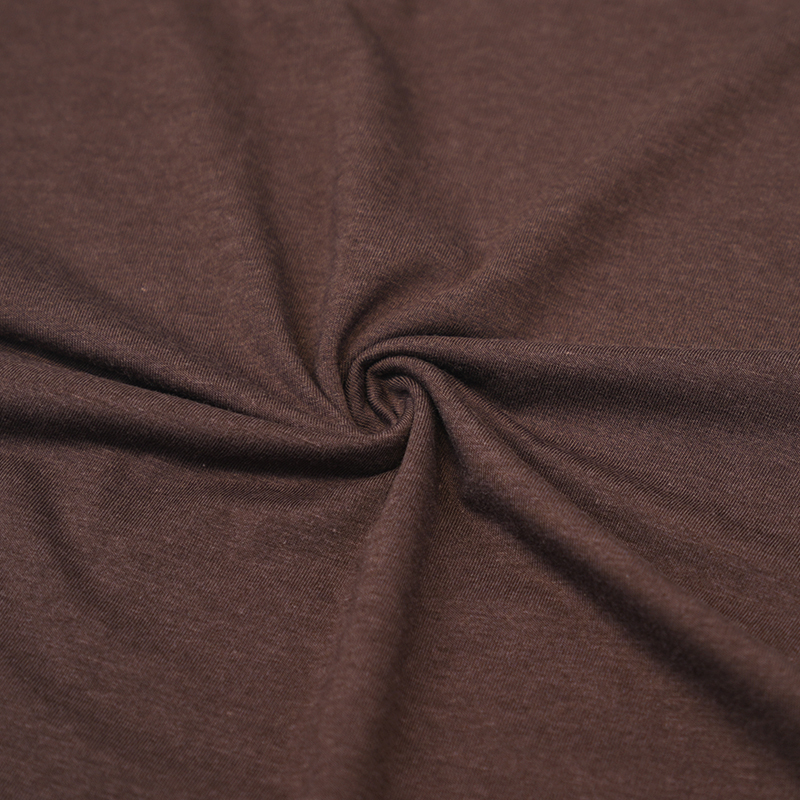
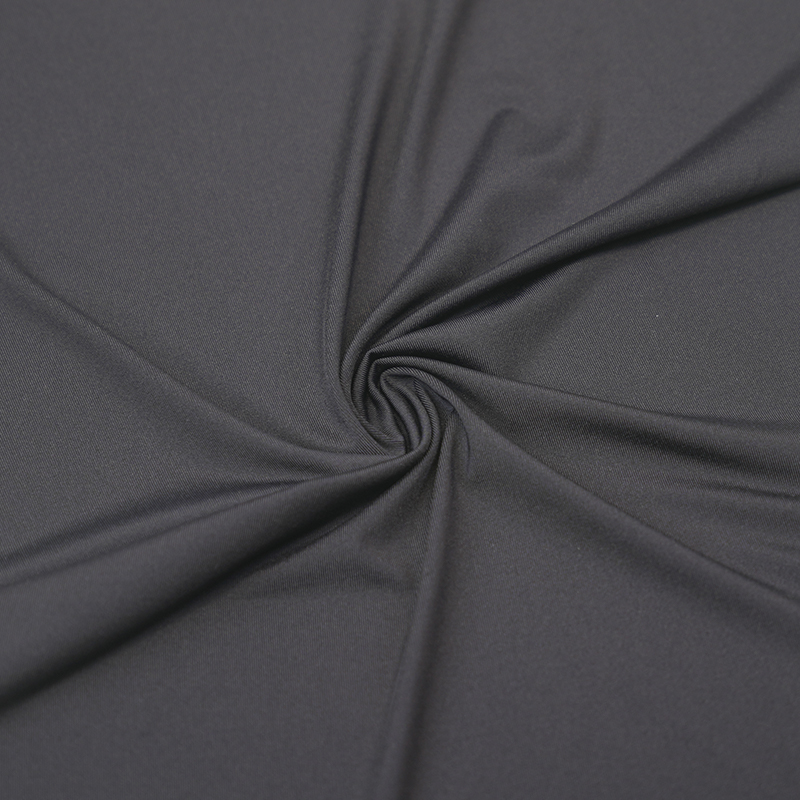
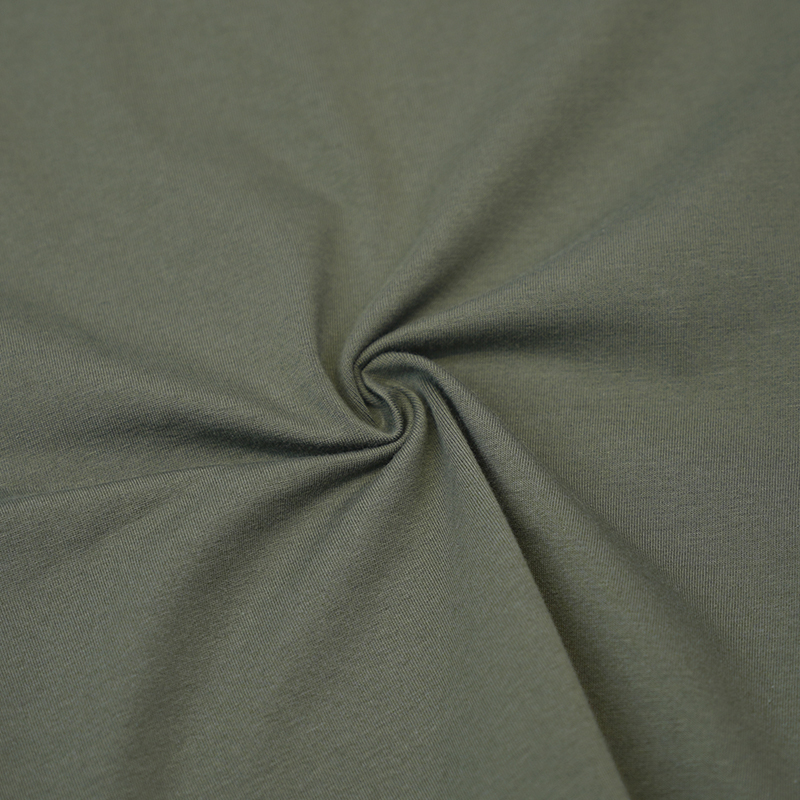
Built specifically for loungewear, this blend combines the silky hand feel of organic bamboo viscose with the shape stability of cotton and enough spandex content to keep fitted pieces moving with the body. It sits at a mid weight that works across joggers, tees, and lounge sets without feeling too thin for daily wear or too heavy for indoor use.
Bamboo viscose also carries a sustainability story that plain synthetic knits cannot match, since bamboo grows quickly on marginal land without the irrigation and pesticide demands of conventional cotton farming. For brands building a loungewear line around a natural, low-impact positioning, that combination of feel and sourcing story is difficult to replicate with any single-fiber alternative.
Beyond the flagship bamboo-cotton jersey, a few related fabrics cover the loungewear styles that fall outside a basic tee or jogger. Matching the fabric to the specific product, rather than defaulting to one fabric across an entire line, is what keeps a collection feeling considered instead of generic.
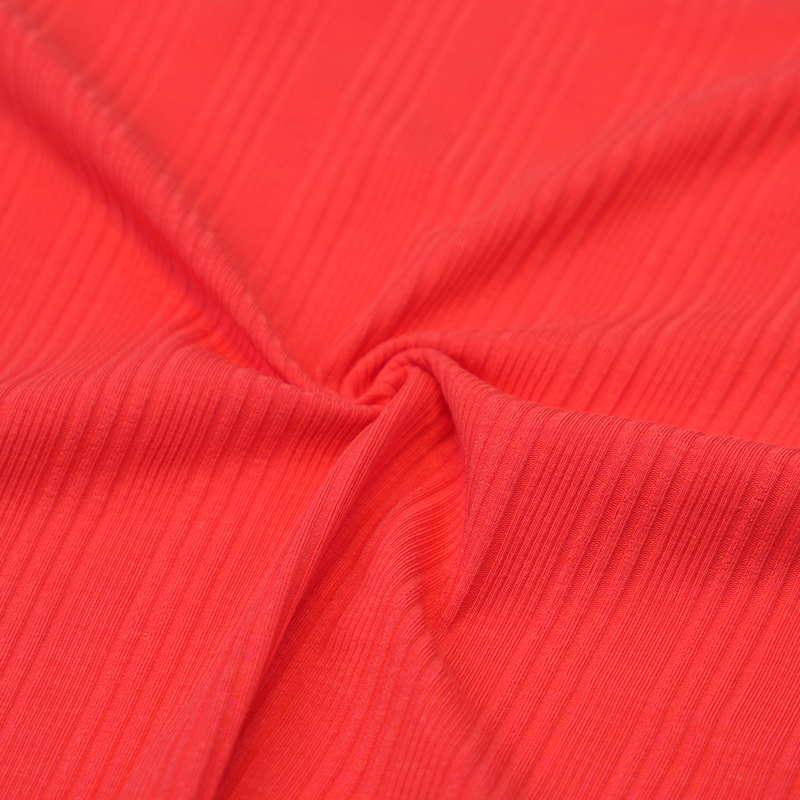
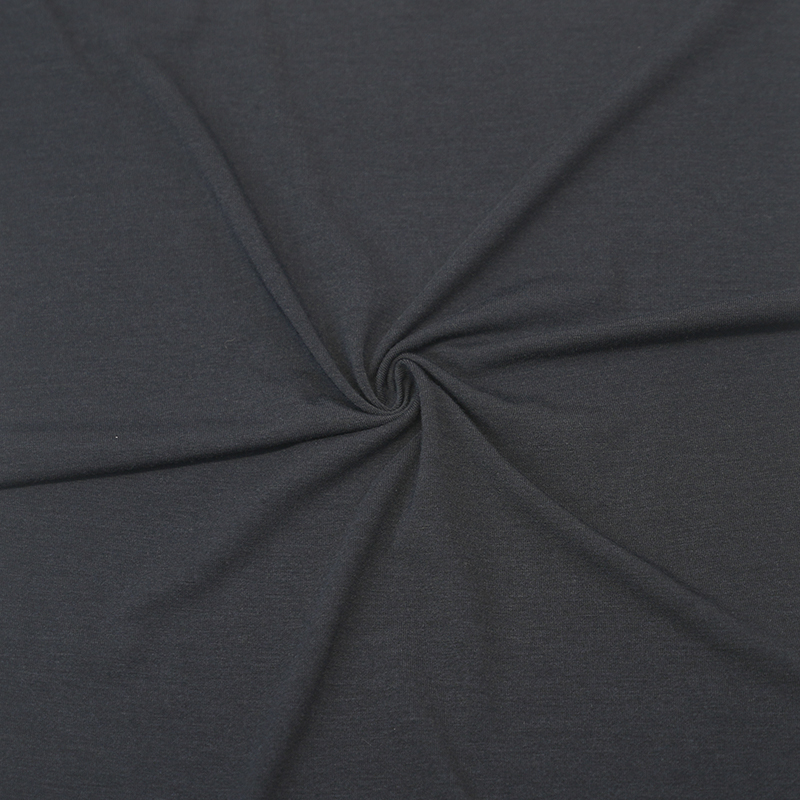
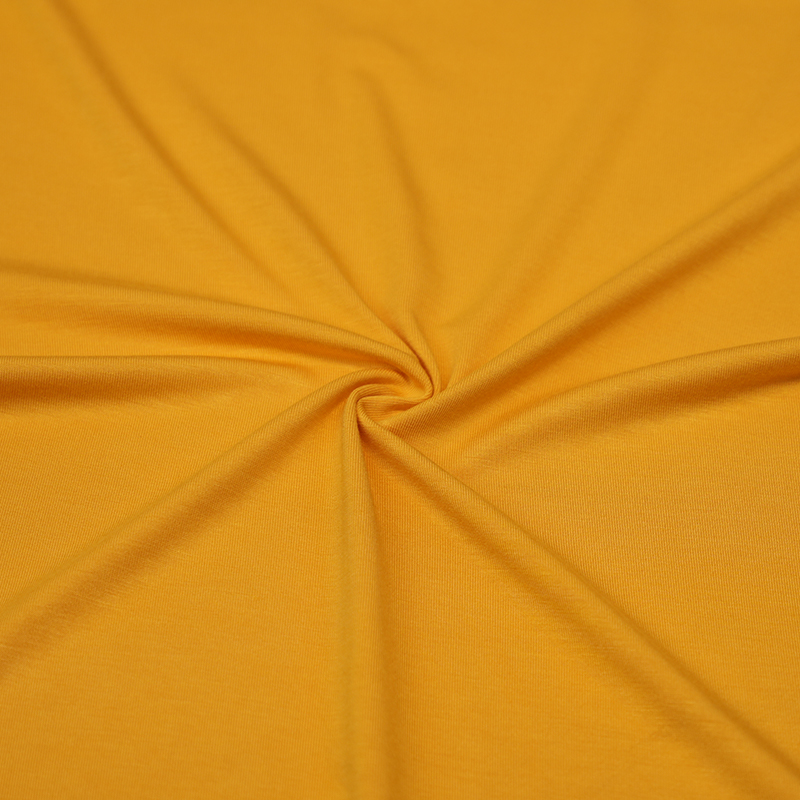
For brands and buyers evaluating suppliers, a few checks separate a fabric that performs well in a swatch from one that performs well after thousands of units and dozens of wash cycles.
Founded in 2001, Nantong Tianhong Textile Technology Co., Ltd. is a specialized manufacturer of sustainable, high-performance natural fiber fabrics, integrating R&D, production, and global sales. Located in Nantong, one of China's key textile hubs, Tianhong benefits from a well-established industrial ecosystem that ensures efficient sourcing, streamlined manufacturing, and reliable delivery under strict quality control. Sustainability is central to Tianhong's operations, supported by certifications including FSC, OCS, and OEKO-TEX Standard 100, and a continued focus on innovation drives the development of advanced fabric solutions for global partners.
Related Products
Contact Us for More Details
Don't hesitate to contact when you need us!
Contact Information
Add:
Room 806, Building D, Jingyang Plaza, Chongchuan District, Nantong City, Jiangsu Province, China
E-mail:
Product Category
QR Code
Join our community and stay connected
 English
 Español
 Tiếng Việt