Language

2026-11-13
Content
Single jersey is the lightest and most common knit structure, ideal for T-shirts and underwear. Interlock is thicker, more stable and smooth on both sides, so it suits base layers, printed tees and sleepwear. Rib has the most stretch and recovery across the width, so it fits close-fitting garments, neckbands and cuffs. Pique has a textured surface that adds breathability and structure, which is why it is the standard for polos and sport shirts.
Fiber gets most of the attention in fabric sourcing, but structure decides how a fabric stretches, curls, sews and prints. This guide compares the four structures buyers ask about most, shows where each one works best, and ends with a checklist you can use when you brief a supplier.
All four structures are weft knits, made from rows of interlooped yarn. Rows running across the fabric are called courses, and columns running along its length are called wales. How those loops are arranged, and how many needle beds are used to make them, creates the differences in stretch, thickness and appearance.
One needle bed produces single jersey and single pique: lighter fabrics with a smooth face and a looped back. Two needle beds produce rib and interlock: thicker, more stable fabrics, with rib showing vertical ridges and interlock showing a smooth face on both sides.
This is why structure has such a strong effect on garment behavior. A fabric knitted on one bed can curl at the cut edge and stretch mainly across the width. A fabric knitted on two beds usually lies flat and holds its shape better.
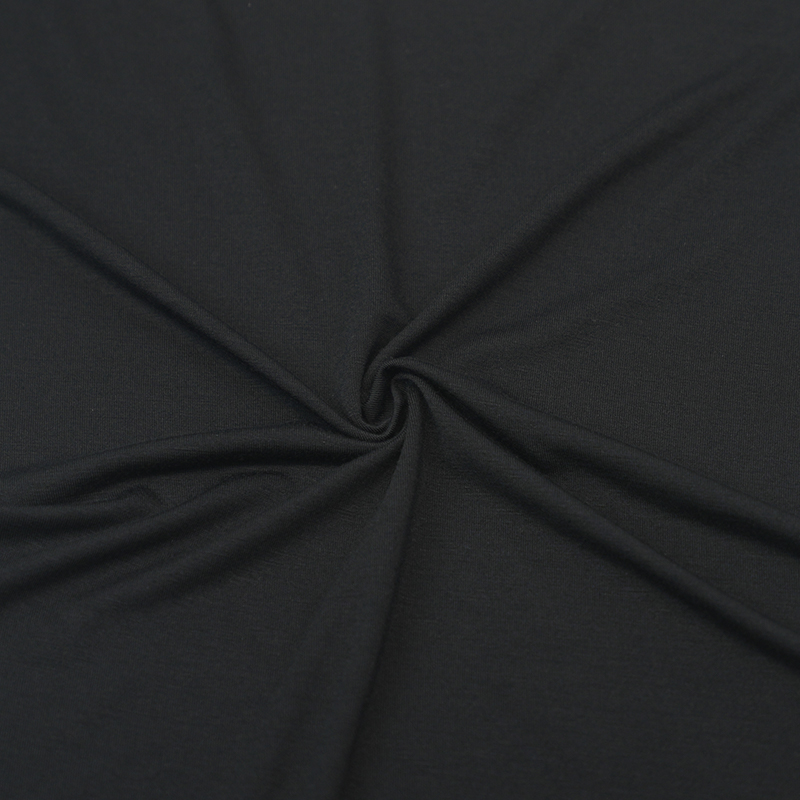
Single jersey has a smooth face made of small V-shaped stitches and a looped, slightly rougher back. It is light, drapes well and stretches mainly across the width, with less stretch along the length. Adding a small share of spandex improves recovery for fitted garments.
Jersey is the default for T-shirts, underwear, camisoles and light dresses because it is cost-effective and comfortable. Its main production issue is edge curling: cut edges roll inward, which makes cutting and sewing slower unless the fabric is handled carefully. Drop-needle jersey is a variation that adds fine vertical lines for a lightly textured look.
T-shirts, underwear, camisoles, light layering pieces.
Edge curling, twisting after washing, and thin fabric showing through at low weights.
For composition, weight and sourcing details on this structure, read our Knit Stretch Jersey Fabric Guide.
Interlock is knitted on two needle beds so that two layers of rib are locked together. The result looks like jersey face on both sides, with no loopy back. It feels smoother and denser than jersey, lies flat when cut, and holds its shape better.
Stretch is moderate and generally lower than rib, which makes interlock a stable choice for garments that should not bag or twist. The flat, even surface also takes print well. Typical uses include base layers, polo-style tops, sleepwear, printed tees and athletic pieces that need more body than jersey.
Base layers, sleepwear, printed tees, garments that need body and stability.
Higher fabric cost than jersey, and more warmth than a light summer garment needs.
If you want to see how this structure behaves in synthetic fibers, read What Is Nylon Spandex Interlock Fabric?, and for a bamboo viscose view see Jersey vs. Interlock vs. Fleece.
Rib is knitted on two needle beds with face and back wales alternating, which creates vertical ridges. In a 1x1 rib the pattern alternates every wale, and in a 2x2 rib it alternates every two wales. The structure pulls together like a spring, so rib stretches a lot across the width and recovers strongly.
Rib is used for neckbands, cuffs and waistbands, and also as a main fabric for fitted tops, tank tops and close-fitting loungewear. It lies flat at the edges and holds a fitted shape well. Its ridged surface is a visible design feature, so it is chosen deliberately rather than as a plain base.
Fitted tops, tanks, trims, cuffs and neckbands, close-fitting loungewear.
Cutting accuracy, because rib relaxes after cutting, and seams that must stretch with the fabric.
Pique is a textured knit with a raised pattern, often small diamonds or a honeycomb, formed by tuck stitches. It comes in single and double versions, and the double version is thicker and more stable. The raised surface lifts part of the fabric away from the skin, which helps airflow and gives the garment a structured look.
Pique is the classic polo shirt fabric and is widely used for sport shirts and casual tops. It holds its shape well, is less likely to cling, and hides minor surface marks better than a smooth fabric. Stretch is low to moderate, so fit is usually set in the pattern rather than in the fabric.
Polo shirts, sport shirts, casual structured tops.
Snagging on the raised texture, and print detail that follows the surface pattern.
| Feature | Single jersey | Interlock | Rib | Pique |
| Surface | Smooth face, looped back | Smooth on both sides | Vertical ridges | Raised texture |
| Stretch | Good across width | Moderate, stable | Highest across width | Low to moderate |
| Edge curling | Strong | Very little | Very little | Low |
| Typical weight | Roughly 120 to 200 GSM | Roughly 160 to 260 GSM | Roughly 180 to 300 GSM | Roughly 160 to 260 GSM |
| Print quality | Good | Very good, flat surface | Fair, ridges affect detail | Fair, texture affects detail |
| Best for | Tees, underwear | Base layers, sleepwear | Fitted tops, trims | Polos, sport shirts |
Several other knits are built on the same principles and are often compared with the four above.
Structure affects production as much as it affects wear. Plan for these differences before you commit to a fabric.
When you contact a supplier, send the structure name, fiber content, target GSM and end use together. Weight guidance is covered in What Is Gram Weight (GSM)?
Neither is better in every case. Interlock is thicker, more stable and smoother on both sides, so it suits garments that need body. Jersey is lighter, cheaper and more drapey, so it suits tees and underwear. Choose by garment, not by ranking.
Both. Rib is a standard trim fabric for necklines, cuffs and waistbands, and it is also used as a main fabric for fitted tops, tanks and close-fitting loungewear where its stretch and ridged look are wanted.
Pique has a small raised pattern, often diamonds or honeycomb, and is typically used for polos. Waffle has a larger grid of raised and recessed cells that adds loft and airflow. Both are textured, but waffle has a deeper, more three-dimensional surface.
Interlock and single jersey are the usual choices because their surfaces are flat and even. Interlock lies flat and holds fine detail well. Rib and pique can still be printed, but their texture interrupts detailed images.
Yes. Every knit relaxes after finishing and washing, and structure changes how it relaxes. Jersey can twist and rib can change in width. Pre-shrink treatment and a wash test on your own specification are the reliable way to control it.
Thicker structures such as interlock and double pique trap more air than light jersey. For real warmth, brushed structures such as fleece and french terry with a soft back are the standard choices.
Related Products
Contact Us for More Details
Don't hesitate to contact when you need us!
Contact Information
Add:
Room 806, Building D, Jingyang Plaza, Chongchuan District, Nantong City, Jiangsu Province, China
E-mail:
Product Category
QR Code
Join our community and stay connected
 English
 Español
 Tiếng Việt